

Gold prices stabilize near their highest level in over two months after US inflation slows.
Gold prices stabilized today near their highest levels in over two months, after the precious metal saw a strong rally supported by a slowdown in US inflation. This strengthened market expectations regarding the possibility of the US Federal Reserve cutting or holding interest rates steady in the near future.
Gold prices jumped by about 1% during today's trading, reaching their highest level in over two months at levels approaching $4,450 per ounce, before later retreating to below $4,400 per ounce, as traders took some profits and awaited further US economic data.
Gold awaits producer inflation data
Investors are now focused on the US Producer Price Index (PPI), due later today, looking for further indications of the direction of inflation and whether the Federal Reserve will change its monetary policy course at its upcoming meetings. The producer price data comes after US inflation figures released on Wednesday showed a slowdown in year-on-year price growth for the second consecutive month, reducing pressure on policymakers to tighten monetary policy and raise interest rates in the near term.
According to market pricing, the probability of a US interest rate hike at the September meeting has now fallen to around 34%, compared to nearly 50% the previous day, indicating a shift in investor expectations following the latest inflation data.
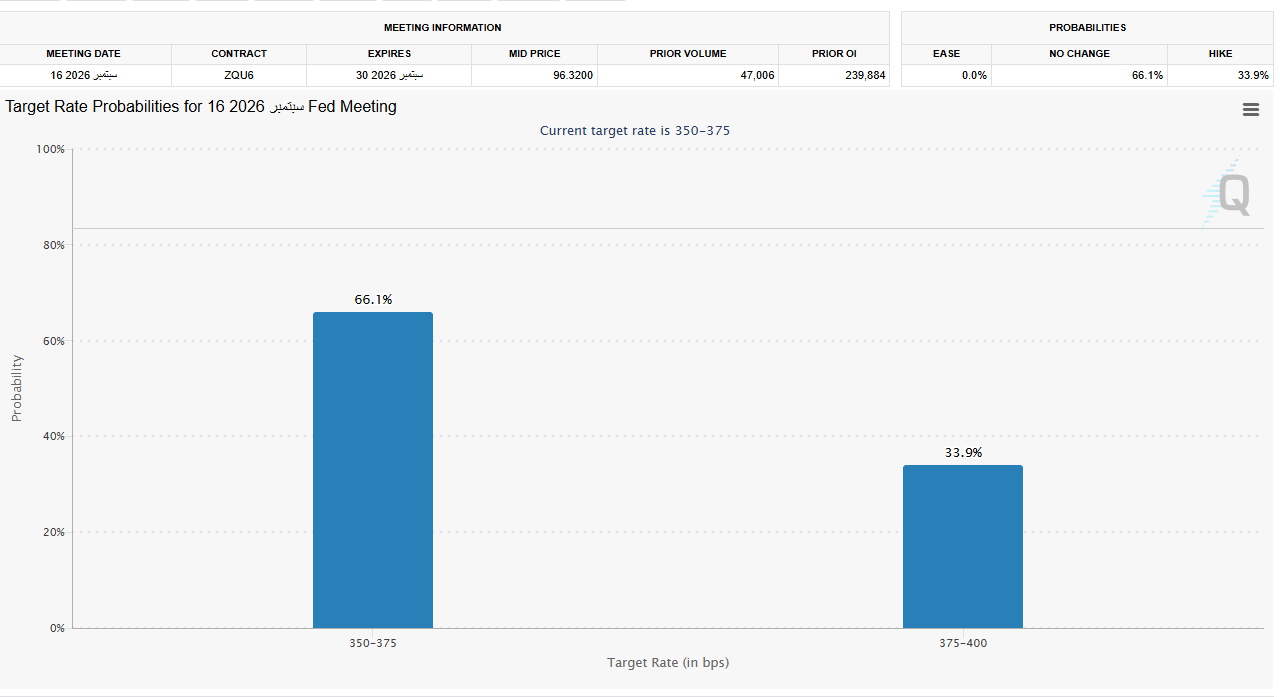
Lower interest rate expectations support gold prices
Gold prices typically benefit from lower interest rate expectations, as lower interest rates reduce the opportunity cost of holding gold, which does not offer a cyclical return like bonds and other fixed-income assets.
Continued declines in inflation and moderate price pressures would give the Federal Reserve more room to keep interest rates at current levels, a scenario that could support demand for gold in the coming period.
However, traders prefer to wait for the producer price data before taking large new positions, especially since any higher-than-expected inflation reading could revive concerns about the continuation of a tight monetary policy and put downward pressure on the precious metal.
Oil prices fell amid continued uncertainty
In energy markets, oil prices declined amid expectations of lower demand, as negotiations between the United States and Iran remain stalled.
Markets are closely monitoring geopolitical developments in the region, particularly given the ongoing disagreements between Washington and Tehran regarding efforts to reach an agreement that would permanently end the Gulf War.
According to a high-ranking Iranian source, talks aimed at reviving the interim agreement reached in June have not yet made tangible progress, maintaining geopolitical uncertainty in global markets.
What awaits gold in the coming period?
The direction of gold prices in the coming period is largely linked to US economic data and interest rate expectations.
Producer Price Index (PPI) data, along with upcoming inflation and jobs indicators, will be among the most important factors that could determine the direction of the Federal Reserve's monetary policy.
If the data confirms a continued decline in inflationary pressures, gold may find further support to rise and attempt to break through the $4,450 level again, potentially reaching $4,500 per ounce.
A sudden surge in inflation could strengthen the dollar and raise bond yields, potentially limiting gains for the precious metal.
Therefore, the markets remain focused on US economic data, which is the primary driver in determining gold's direction and interest rate expectations in the coming period.


