

How Does Liquidity Control Forex Market Movement?
Introduction
Liquidity is one of the most important factors affecting the movement of the forex market, as it determines how easily buy and sell orders can be executed without causing significant price fluctuations.
The higher the liquidity, the better the market can handle large orders, while low liquidity can lead to faster, sharper price movements and higher trading costs.
1. What is Liquidity in the Forex Market?
Liquidity simply means how easily a currency can be bought or sold quickly at a price close to the current trading price.
When liquidity is high, there are a large number of participants and buy and sell orders in the market, allowing traders to execute their orders more easily.
When liquidity is low, the number of available orders decreases, and therefore a relatively large buy or sell order can cause the price to move significantly.
2. High Liquidity Typically Reduces Spreads and Slippage
One of the most important practical effects of liquidity is its impact on the spread between the bid and ask prices.
In a highly liquid environment, competition between buyers and sellers is fiercer, and spreads are often tighter, reducing the cost of entering and exiting a trade.
However, during periods of low liquidity, spreads may widen, and the likelihood of slippage—the execution of a trade at a price different from the expected price—increases.
This is particularly important for short-term traders because widening spreads and slippage can directly impact the outcome of a trade, even if the price later moves in the expected direction.
3. Why do prices move sharply when liquidity is low?
When liquidity is low, the market doesn't necessarily need a huge trading volume to move the price. A limited number of large orders can consume the available orders at the current price, causing the price to move to other levels in search of new buyers or sellers.
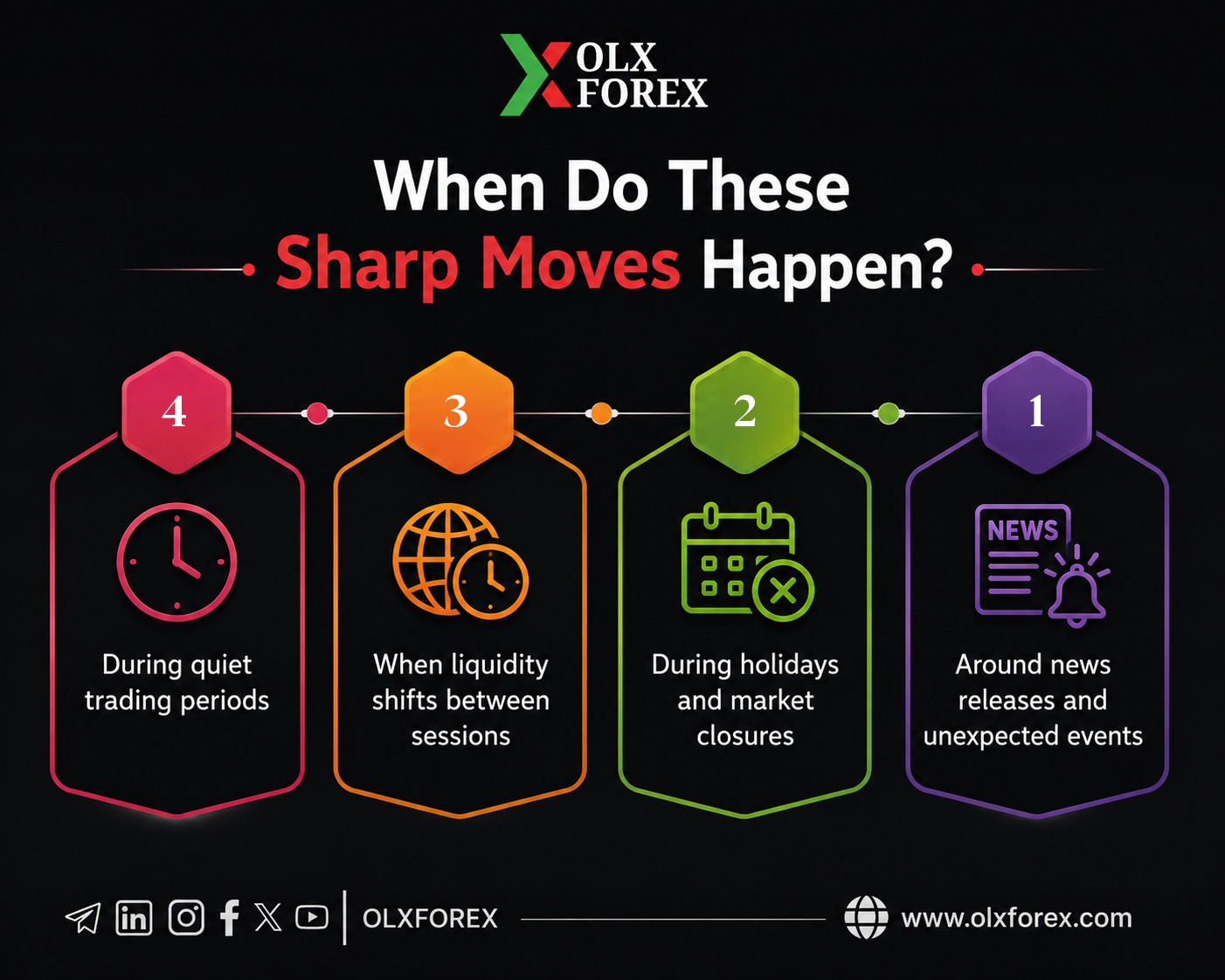
This is why we might see sharp price movements during:
Quiet trading periods.
Liquidity shifts between sessions.
Holidays and market closures.
Some periods surrounding news and unexpected events.
But it's important to distinguish between high volatility and high liquidity. The market may experience sharp price movements when liquidity is low at various price levels, making order execution more difficult.
4. How can a trader benefit from understanding liquidity?
A trader doesn't need to know the exact market liquidity to benefit from understanding liquidity. Instead, they can monitor certain practical indicators before entering a trade.
For example:
Compare spreads before opening a trade.
Pay attention to overlapping trading sessions.
Be cautious during major economic news releases.
Use stop-loss orders, being aware of the potential for slippage during rapid price movements.
Focus on the most active currency pairs if the trading strategy is short-term.
Understanding liquidity also helps traders interpret false breakouts and sudden price movements, rather than assuming every strong movement is the start of a new trend.
Summary
Liquidity is a fundamental element for understanding currency price movements because it affects the ease of order execution, spread widths, the potential for slippage, and the market's capacity to absorb buy and sell orders.
High liquidity doesn't necessarily mean the market won't move strongly, but it typically indicates a greater capacity to absorb trades without significant price fluctuations due to a single event. Therefore, a trader who monitors liquidity, spreads, volatility, and session timing, along with technical and fundamental analysis, gains a more comprehensive understanding of market conditions before making a trading decision.


