

Surprises Will gold prices exceed $5,000 per ounce in 2026?
Will gold prices continue to set new record highs in 2026?
Gold set a new record at the end of the year, with gold prices breaking through $4,500 per ounce, up more than 70% since the beginning of the year (its strongest performance since 1979).
Gold is ending 2025 at an all-time high, and this momentum is expected to continue into 2026.
Expectations are to prepare for even higher levels in 2026, with some analysts expecting gold to break through the $5,000 level and reach levels close to $6,000 per ounce by the end of 2026.
However, despite gold hitting multiple record highs this year and exceeding our 2025 forecasts, you can see our previous forecasts here
However, the drivers of its rally are still there and increasing at an impressive pace, and it is quite clear that gold's momentum, and the ETF funds are clearly confirming it.
Data from the World Gold Council shows that physical gold-backed ETFs recorded consecutive monthly gold inflows in November, amounting to $5.2 billion, an astonishing figure.
The World Gold Council noted that total ETF assets reached a record $530 billion, with a massive jump in holdings to 3,932 tons, the highest level at the end of last month.
Factors for gold's rally include safe-haven demand as a result of geopolitical and trade tensions, markets pricing in low US interest rates, and aggressive buying by central banks.
Central banks bought 220 tons in the third quarter and 634 tons from the beginning of the year to the end of the third quarter.
This remarkable combination explains why gold prices will continue to rise through 2026.
What global banks are forecasting for gold prices in 2026
- Goldman Sachs: $4,900 per ounce by December 2026
- JP Morgan: Gold price to rise towards $5000, averaging $5055 per ounce by the fourth quarter of 2026
- Bank of America: Gold to reach $5,000 per ounce in 2026
- Morgan Stanley: Expects the gold price to reach $4,500 per ounce by mid-2026 (with slow gains thereafter)
- Yardeni Research: Expects the price of gold to reach $6,000 per ounce in 2026, with gold prices up nearly 20% compared to the most optimistic major bank forecasts.
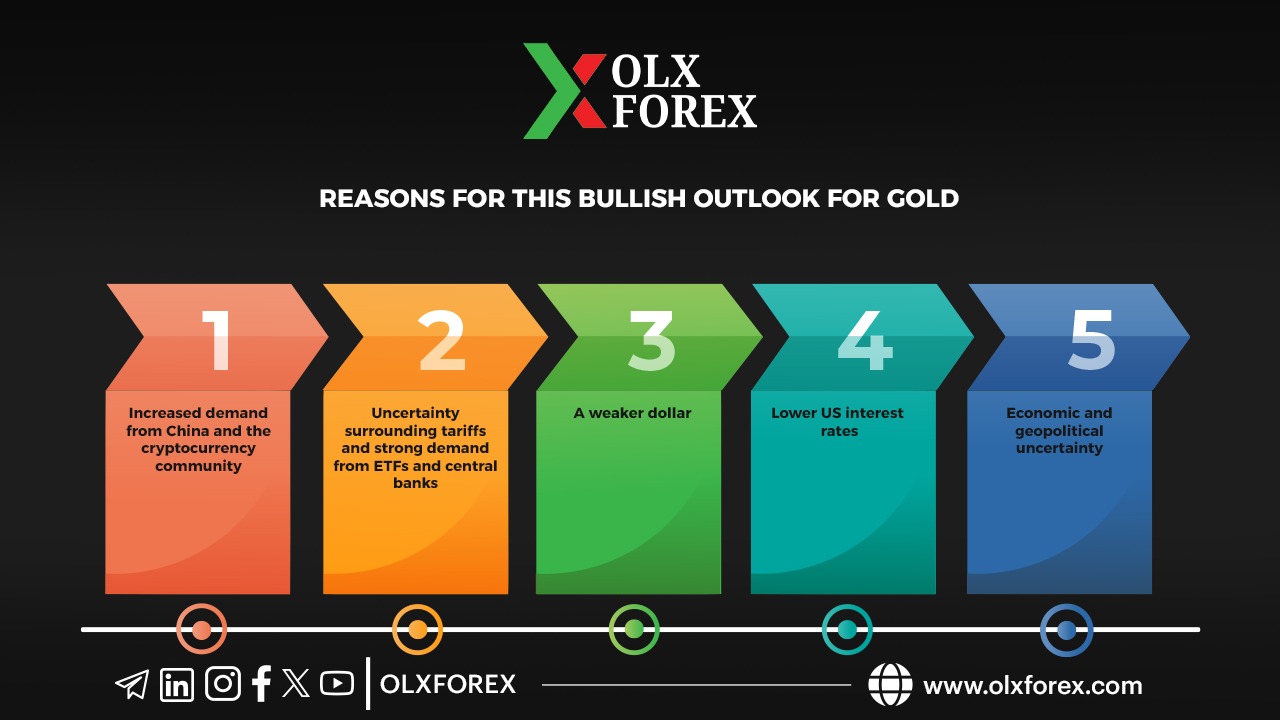
What are the reasons for this bullish outlook for gold
- Growing demand from China and the cryptocurrency community
- Uncertainty over tariffs and strong demand from ETFs and central banks
- Dollar weakness
- Lower U.S. interest rates
- Economic and geopolitical uncertainty
Investor demand is also expected to continue to grow from the strength seen in 2025, and all of these factors have contributed to the current rally.
A look at silver
Analysts expect the positive supply-demand dynamic for silver to continue, with some forecasts suggesting that the silver price could reach $100/oz as it approaches $80/oz by the end of 2025, benefiting from speculative momentum and strong market fundamentals, although volatility is possible due to the small market size.
The most important factors for silver's rise are:
- A severe supply crunch: The silver market is facing a persistent shortage. Approximately 25,000 tons of silver is produced globally each year, most of which comes as a by-product of mining other metals such as copper and lead.
This nature has made the supply response slow even as prices rise, and the crisis has been exacerbated by low inventories in major global storage centers like London.
- Unprecedented industrial demand: The current landscape is radically different from the 1980s due to massive demand from the high-tech sectors, where silver is used extensively in:
- Solar panels (solar energy).
- Electric vehicles (which can be as low as a kilogram per car with the development of batteries).
- Artificial intelligence components and data centers.
- Geopolitical and trade factors: Trade tensions and rising tariffs are exacerbating supply chain sensitivities, as these concerns push importers to expedite shipments, putting pressure on available inventories.
Gold and silver concluded an exceptional year, confirming their historic role as a safe haven and store of value in times of economic and geopolitical uncertainty.
As new and bullish targets for 2026 loom on the horizon, technical indicators and history remind us that strong trends can experience violent fluctuations.
So, whether you are a long-term investor who sees these metals as a cornerstone for hedging, or a short-term trader looking for opportunities in market volatility, risk management and understanding the underlying drivers remain the keys to success in this bright and volatile market.
What is your assessment of the future of gold and silver prices in light of these expectations? Do you think it is still worthwhile to invest in them at these historic levels?


