

Reasons for Traders' Losses
Many traders believe that having a successful trading strategy is enough to make profits in the Forex market, but reality proves that it's more complex than that. There are many psychological and management factors that can lead to losses, even if a trader's strategy has been effective and tested for a period of time. This is because success in trading depends not only on the strategy itself but also on how it is implemented and the discipline required to execute it.
Here are the most prominent points that contribute to traders losing their trades despite strong analysis.
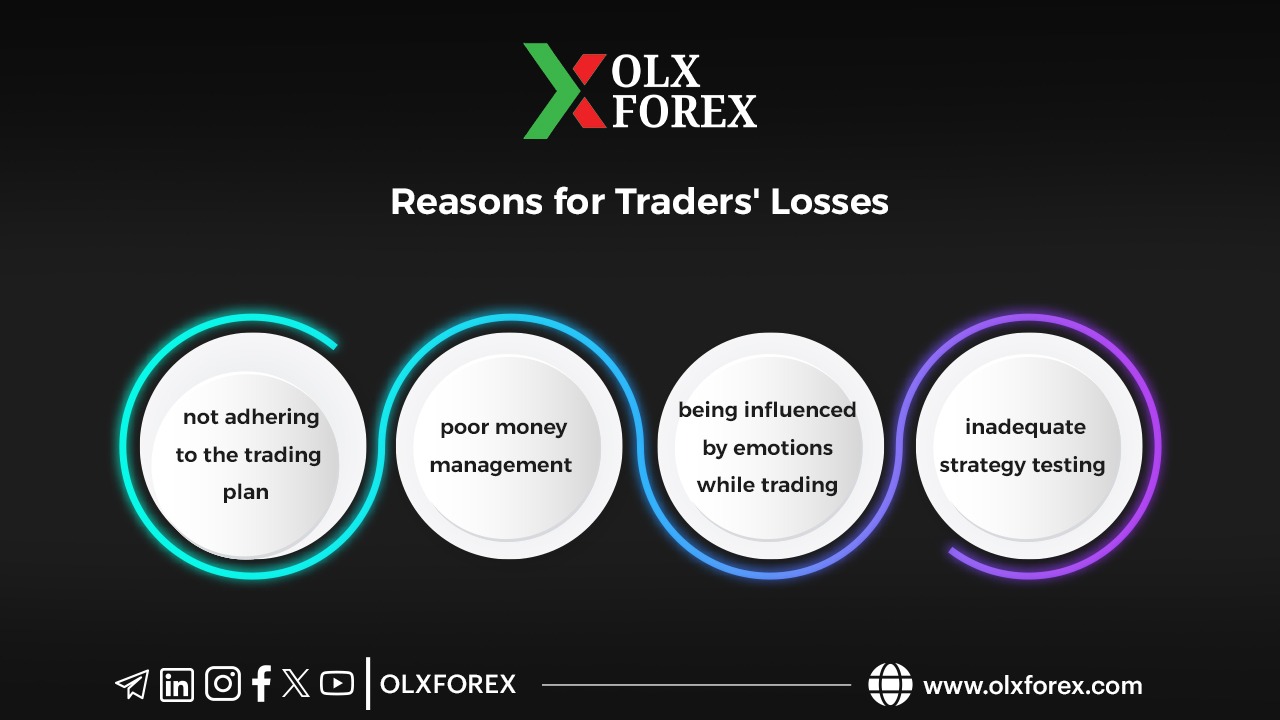
First, not adhering to the trading plan
Many traders develop a clear plan for entering and exiting trades, but they abandon it when the market starts moving rapidly. Fear of loss or greed for greater profits drives them to change their decisions randomly.
This behavior often leads to entering ill-considered trades or prematurely exiting winning trades, which reduces the effectiveness of the strategy, no matter how strong it may be.
Second, poor money management
Even the best strategies experience periods of normal losses, but the problem arises when a trader risks a large percentage of their account on a single trade. In this case, a few losing trades can lead to the loss of a significant portion of their capital.
[3/13/2026 3:56 AM] HEMA: Good money management ensures that a trader stays in the market longer and gives them the opportunity to recover losses when the strategy becomes profitable again.
Third, being influenced by emotions while trading
Emotions such as fear, greed, and anger play a significant role in trading decisions. After a losing trade, a trader might try to quickly recoup the loss by entering consecutive trades without sufficient analysis.
This type of emotional trading often leads to amplified losses because decisions become based on psychological reactions rather than logical market analysis.
Fourth, inadequate strategy testing
Some traders adopt a new strategy after seeing good results in a short period, without testing it on historical data or a demo account for a sufficient duration.
Failure to test a strategy in different market conditions can lead a trader to believe it will always be successful, only to discover later that it doesn't work well in all situations.
In conclusion
Having a successful strategy is an important step, but it's not the only factor in achieving trading success. Discipline, capital management, emotional control, and thorough strategy testing are essential elements that ensure the strategy is implemented correctly and yields consistent, long-term results.


