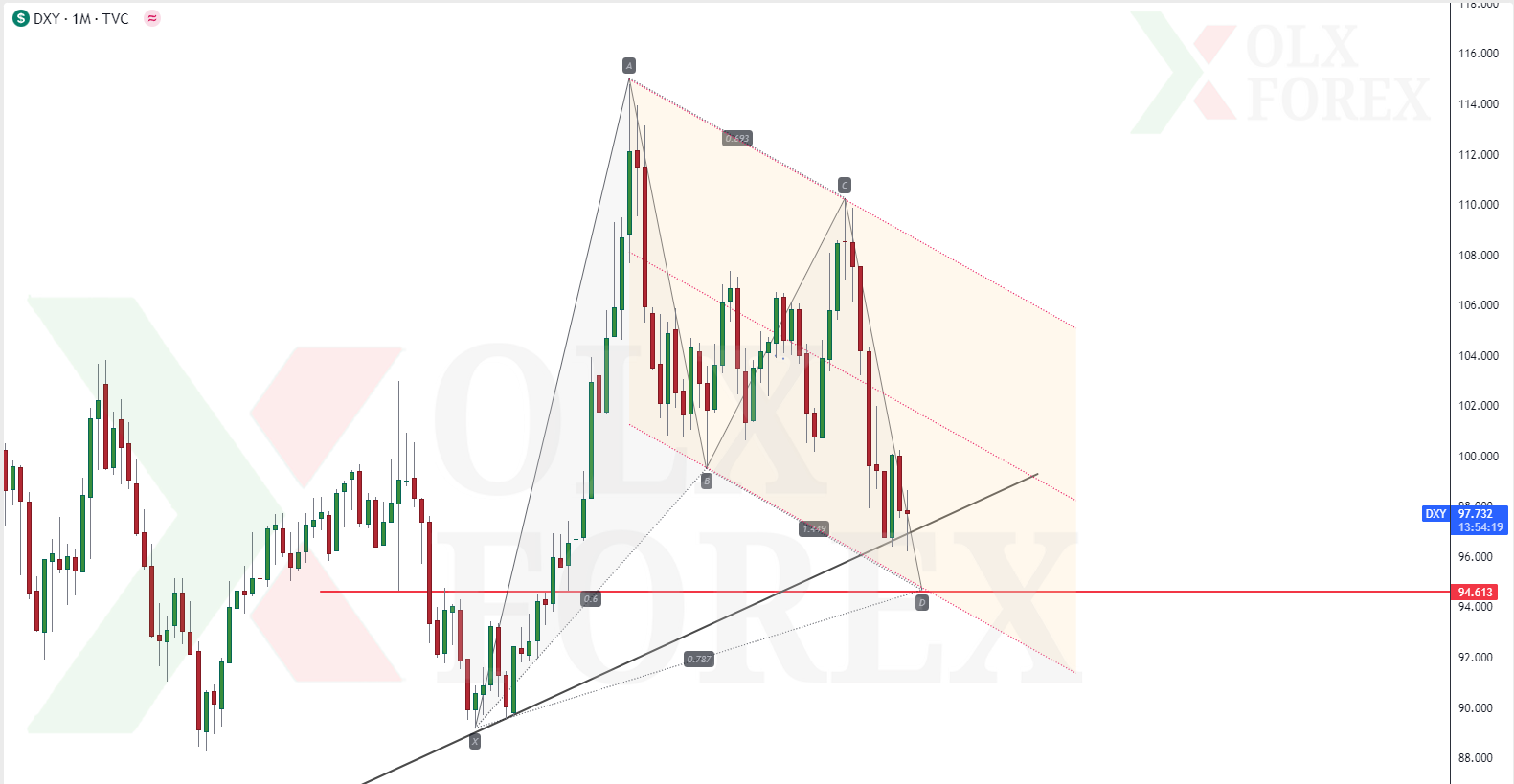

The dollar index is falling for the third day, affected by the spectre of a government shutdown
The US Dollar Index (DXY) continues to decline for the third day in a row, falling by 0.2% in morning trading this morning, amid growing fears of an imminent government shutdown that may disrupt the release of important economic data, especially the jobs report for September.
Continuous decline and weak monthly performance
The US dollar is currently recording:
- The third consecutive daily decline by an average of 0.2%.
- The eighth losing month in the last nine months.
- A performance that goes against the safe haven narrative promoted by optimists.
Government shutdown threat to jobs report
The government funding crisis poses a direct threat to the transparency of economic data, as in the event of a government shutdown, we will have a possible cancellation of the September jobs report scheduled for release next Friday, as this report is the main input for the Federal Reserve before the next interest decision.
Serious implications for monetary policy
Economists warn that:
- Data paralysis may hinder the central bank's ability to accurately assess the health of the economy.
- Ignoring the report may put monetary policymakers in a real quandary.
- A prolonged shutdown could delay other crucial economic readings for months.
Stalled political efforts
President Trump's meeting with congressional leaders on Monday failed to achieve a breakthrough, as the hours continue to separate from the start of the government shutdown, which increases uncertainty in financial markets, also downward pressure on the US dollar, and investors are moving towards alternative safe havens.
An ambiguous economic landscape
In light of these developments, traders are losing one of the most important compasses for assessing the US labor market, as the Federal Reserve faces the prospect of a November decision without recent jobs data, the risks of a slowdown in economic activity are aggravated as the paralysis continues.
The scene seems set for continued waves of volatility in the markets, with all eyes focused on Washington in the coming critical hours that will determine the fate of government funding and the course of US monetary policy.