
Gold Prices Fall Today as Expectations of a U.S. Interest Rate Hike Mount and Demand for Safe-Haven Assets Declines
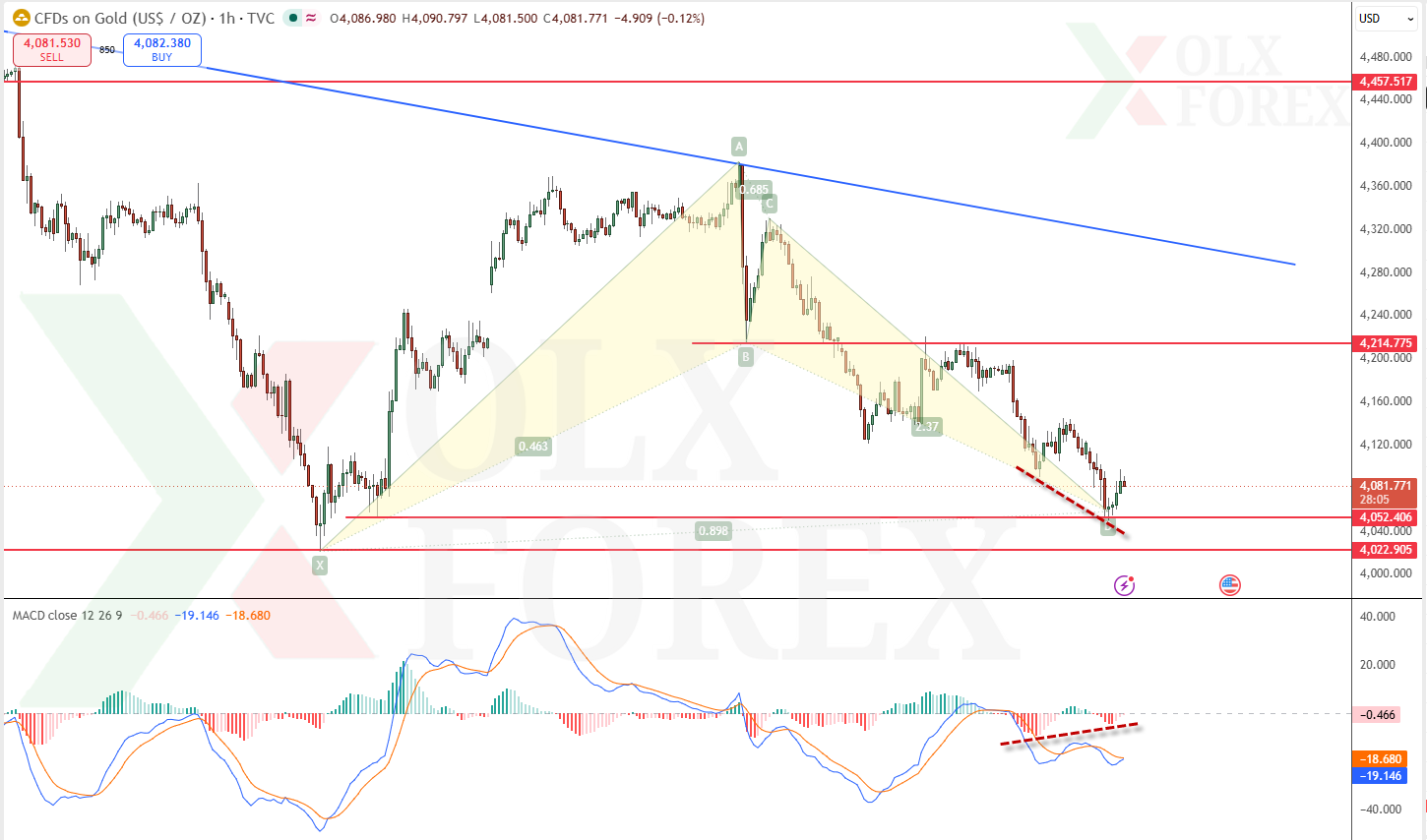
Gold prices saw a notable decline during today’s trading, with the price per ounce falling by more than 1.5% to reach $4,050, approaching its lowest levels in about 7 months before experiencing a limited rebound.
This decline came as investor appetite for various assets waned, with gold failing to capitalize on its traditional status as a safe-haven asset amid the sell-off that swept global markets, amid mounting expectations that the U.S. will maintain its hawkish monetary policy.
The Federal Reserve Puts Pressure on Gold Prices
Gold is one of the assets most sensitive to expectations regarding U.S. interest rates, as higher rates increase the appeal of yield-bearing assets such as bonds, thereby reducing demand for the precious metal, which does not generate a yield.
Recently, statements and expectations related to the Federal Reserve have reinforced the likelihood that interest rates will remain at high levels or even be raised again if inflationary pressures persist, prompting investors to reduce their gold holdings.
Easing Geopolitical Tensions Reduce Demand for Safe Havens
At the same time, progress in negotiations between the United States and Iran has helped ease concerns regarding global energy markets, particularly as shipping traffic through the Strait of Hormuz one of the most vital corridors for global oil trade has improved.
This development has eased concerns about supply disruptions and rising energy prices, which in turn has dampened inflation expectations and led investors to reduce their demand for gold as a risk-hedging instrument.
Additional Pressure from U.S. Stock Markets
Gold also faced additional selling pressure as a result of the sharp decline in U.S. technology stocks, as some investors sold part of their gold holdings to cover losses incurred in the stock markets and rebalance their investment portfolios.
This behavior is common during periods of high volatility, as investors seek to raise liquidity from the most liquid assets, including gold.
What is the outlook for gold prices in the coming period?
Gold price movements will remain primarily linked to the trajectory of U.S. monetary policy and upcoming economic data, particularly U.S. inflation and labor market figures.
If the Federal Reserve maintains its hawkish stance and the U.S. dollar and bond yields continue to rise, gold may come under further pressure.
However, if there are signs of a slowdown in the U.S. economy or a decline in inflation, gold may recoup some of its losses and once again benefit from its role as a safe-haven asset.
On the technical front, the upward rebound began after the completion of the harmonic bat pattern and its reach of the $4,050 per ounce support level, from which it could begin an upward move as a corrective rally, targeting $4,120 and then $4,210 per ounce.
This scenario will fail if the level of $4020 per ounce is broken.