

How to Enter Trades Very Quickly
Introduction
Did you know that most traders lose not because their analysis is bad, but because they enter at the wrong time? You might see the price rise and buy, only to have it reverse immediately. Or you might see the price fall and sell, only to be surprised by its rise. So, if you want to make faster and smarter decisions, here are 4 basic rules to help you know when to buy and when to sell in less than 30 seconds.
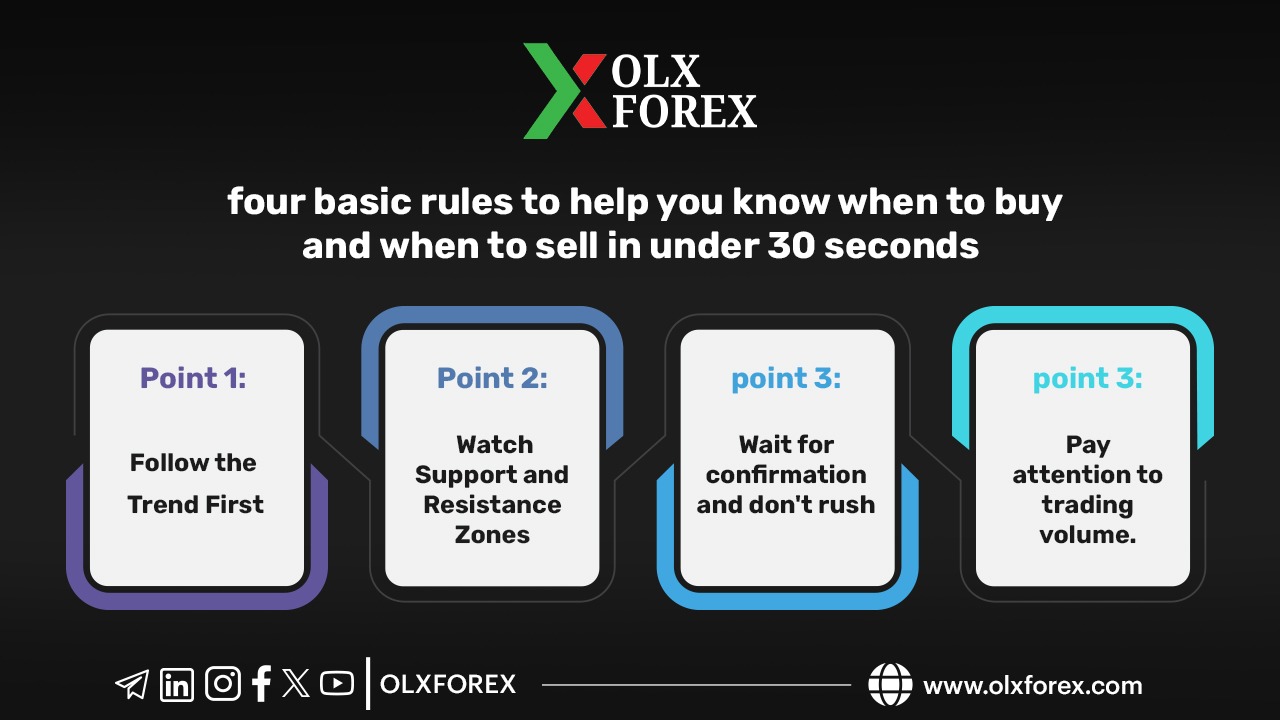
First, follow the trend.
The trend is a trader's friend. If the price is making higher highs and lower lows than before, the market is in an uptrend, and buying is the safest option. However, if the price is making lower highs and lower lows than before, the trend is downward, and selling is the best option.
Second, monitor support and resistance levels.
Support and resistance are among the strongest areas that professionals rely on. When the price bounces off strong support with the emergence of buying power, it could be a good buying opportunity. And when the price encounters strong resistance and fails to break through it, it could be a strong selling opportunity.
Third, wait for confirmation and don't rush.
One of the secrets to successful trading is patience. Don't enter a trade based solely on speculation; wait for a clear signal, such as a strong candle close or a genuine breakout from a key level. Confirmation reduces the chances of falling for false signals.
Fourth, pay attention to trading volume.
Trading volume reveals the strength of the move. If the price breaks through a significant level with a clear increase in volume, this indicates genuine strength behind the move. Breakouts with low volume may simply be a temporary trick before a price reversal.
Summary
Before you buy or sell, ask yourself four questions: What is the market trend? Am I near a significant support or resistance level? Have I received clear confirmation of my entry? And does the trading volume support the move? If these factors are present, the probability of a successful trade increases significantly, and your decisions become more professional.


