
Risks of Leaving a Position Open During News Events
Introduction
Many traders believe that leaving a position open during major economic news events can be an opportunity for quick profits, but the truth is that these are among the most dangerous periods in the market.
In just a few seconds, prices can move wildly, and volatility can increase unexpectedly, potentially turning a winning trade into a significant loss. Therefore, it is crucial to understand the potential risks before deciding to remain in the market during news releases.
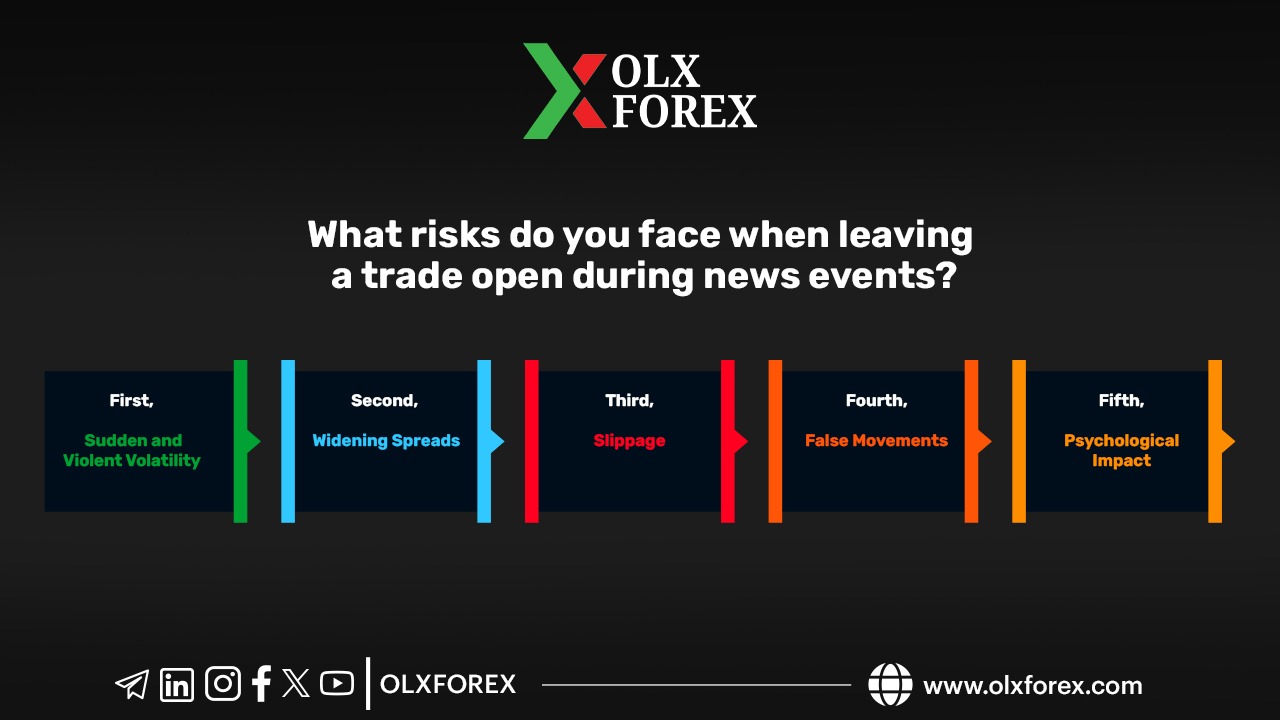
First, Sudden and Violent Volatility
When important news is released, such as inflation data or interest rate decisions, the price can move tens or even hundreds of pips in just a few minutes, making it difficult to control the trade or make a quick decision.
Second, Widening Spreads
During major news events, many brokers temporarily widen spreads due to decreased liquidity and increased risk. This can lead to a larger-than-expected loss, even if the price doesn't move significantly.
Third, Slippage
Your stop-loss or take-profit order may not be executed at the exact price you specified, but rather at a different price due to the rapid price movement. This is known as slippage.
Fourth, False Movements
Often, the price moves strongly in a certain direction immediately after the news is released, then completely reverses a few minutes later. These deceptive movements cause many traders to incur losses despite their initial predictions being correct.
Fifth, Psychological Impact
Watching the market move so rapidly can push a trader to make emotional decisions, such as closing a position early, moving their stop-loss, or entering into retaliatory trades to recoup losses.
Summary
Leaving a position open during major news events can offer the opportunity for significant profits, but it also carries high risks, including extreme volatility, wide spreads, slippage, false movements, and psychological stress.
Therefore, traders should carefully assess their risk tolerance and employ strict money management before trading during news events.
The Risks of Leaving a Trade Open During News Events Introduction Many traders believe that leaving a trade open during major economic news events may be an opportunity to make quick profits, but the truth is that these moments are among the most dangerous periods in the market. Within a matter of seconds, prices can move violently, and volatility can increase unpredictably, potentially turning a profitable trade into a significant loss. Therefore, it is important to understand the potential risks before deciding to stay in the market during news releases. First: Sudden and Violent Volatility When major news is released—such as inflation data or interest rate decisions—prices may move by tens or even hundreds of pips within a few minutes, making it difficult to control your trade or make a quick decision. Second, widening spreads During major news events, many brokers temporarily widen spreads due to low liquidity and increased risk, which can result in you incurring a larger-than-expected loss even if the price doesn’t move much. Third: Price Slippage A stop-loss or take-profit order may not be executed at the exact price you specified, but rather at a different price due to the rapid speed of the price movement—a phenomenon known as price slippage. Fourth: False Breakouts Often, the price moves sharply in a certain direction immediately after news is released, only to reverse completely a few minutes later. These deceptive movements cause many traders to exit with losses despite the accuracy of their fundamental predictions. Fifth: The Psychological Impact Watching the market move very quickly may prompt a trader to make emotional decisions, such as closing a trade early, moving a stop-loss, or entering revenge trades to recoup losses. Summary Leaving a trade open during major news events may offer the opportunity to make significant profits, but it also carries high risks, including violent volatility, widening spreads, price slippage, false breakouts, and psychological pressure. Therefore, traders must carefully assess their risk tolerance and employ strict capital management before trading during news events.


