

Gold Prices Today Hover Around $4,350 Following Weak U.S. Jobs Data
Gold prices remained near their seven-week highs at the start of trading on Monday, having benefited from weak U.S. jobs data that reinforced expectations of an interest rate cut or that rates will remain unchanged in the near term.
Gold prices fell at the start of today’s session as some investors moved to take profits following the precious metal’s strong gains last week, before rebounding once again to approach its recent highs; gold is currently trading near $4,350 per ounce.
Investors attention this week is focused on a series of key U.S. economic data releases, most notably U.S. inflation figures, in search of new clues regarding the path of monetary policy and the Federal Reserve’s decisions on interest rates.
Gold Benefits from Weak U.S. Jobs Data
Gold prices received strong support during last week’s trading following the release of U.S. jobs data for July, which came in much weaker than market expectations.
The data showed that the U.S. economy unexpectedly lost about 23,000 jobs in July, while employment figures for the previous two months were sharply revised downward, reinforcing concerns about a slowdown in the U.S. labor market.
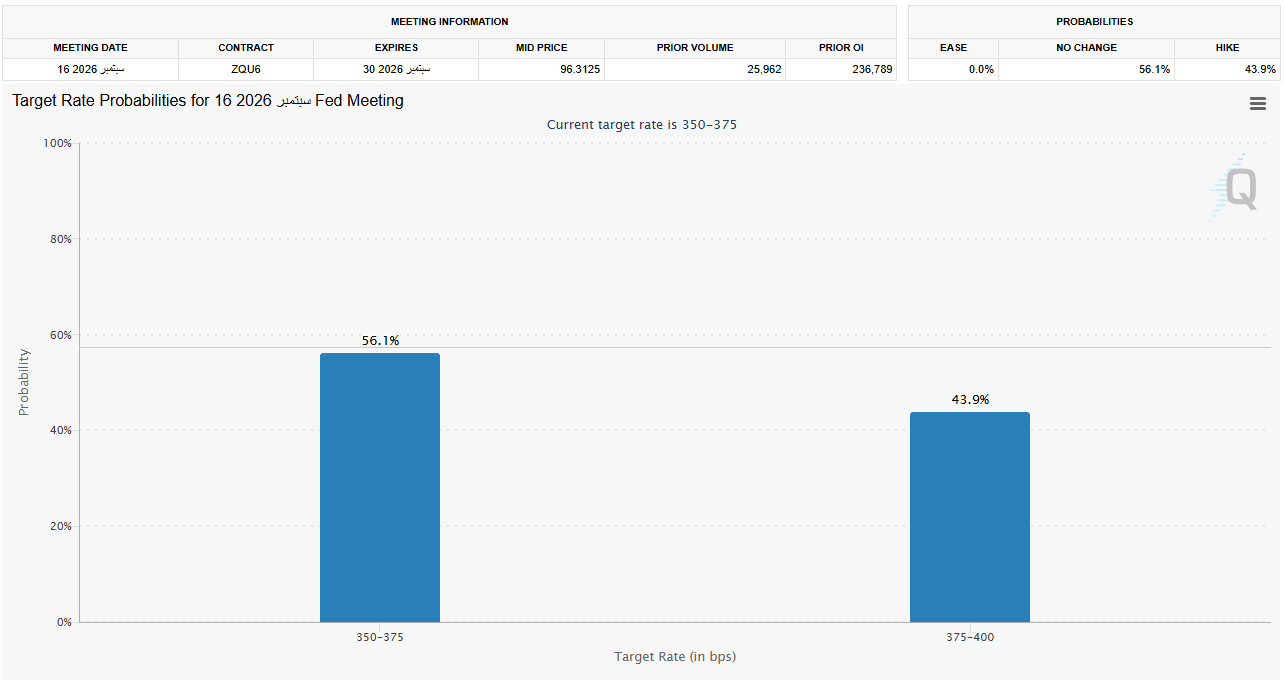
This data led to a repricing of market expectations regarding the Federal Reserve’s monetary policy, as the likelihood of an interest rate hike at the Federal Open Market Committee meeting scheduled for September declined.
According to market pricing, the probability of a 25-basis-point rate hike in September has fallen to about 44%, compared with approximately 67% the previous week.
The decline in rate hike expectations is a positive factor for gold, as lower interest rates reduce the opportunity cost of holding the precious metal, which does not generate a yield or interest.
U.S. Inflation Data in the Spotlight for Gold Markets
Markets are awaiting the release of several key U.S. economic data points this week, which could have a direct impact on the movements of gold and U.S. dollar prices.
Among the most notable of these data points are:
- The U.S. Consumer Price Index (CPI) on Wednesday.
- The U.S. Producer Price Index (PPI) on Thursday.
Inflation data will be the focus of investors’ attention, especially given the ongoing uncertainty surrounding the Federal Reserve’s next move.
If the CPI and PPI data showa decline in inflation rates, this could reinforce market expectations that interest rates will remain at current levels or increase the likelihood of future rate cuts, which could provide additional support for gold prices.
However, if inflation data comes in higher than expected, pressure on gold could resurface, especially if it leads to higher U.S. Treasury yields and increased demand for the dollar.
Lower Interest Rates Boost Gold’s Appeal
Gold typically benefits from lower interest rates or reduced expectations of rate hikes, as the cost of holding non-yielding assets such as gold becomes lower relative to interest-rate-linked assets.
From this perspective, a shift in market expectations regarding the Federal Reserve’s decisions could serve as a supportive factor for the precious metal in the coming period.
Conversely, rising inflation or the release of strong U.S. economic data could dampen expectations of an interest rate cut, which might limit gold’s gains and boost demand for the dollar.
Geopolitical Tensions Remain a Key Factor Affecting Gold
In addition to economic and monetary factors, geopolitical developments continue to influence gold prices, as gold is one of the most prominent safe-haven assets to which investors turn in times of heightened risk and uncertainty.
In the latest developments, Iran announced that it is close to reaching a final agreement with the Sultanate of Oman on establishing new shipping lanes between the two countries through the Strait of Hormuz.
However, Iran has reiterated that the United States must meet a number of conditions before this strategic waterway can be reopened, which keeps geopolitical uncertainty alive in energy and financial markets.
Any new developments regarding the Strait of Hormuz or relations between Iran and the United States could lead to increased market volatility, which in turn could affect demand for gold.
What does the future hold for the price of gold in the coming period?
Attention is currently focused on the global price of gold and its ability to remain near seven-week highs.
The trajectory of U.S. interest rates remains the most important factor in determining the direction of gold in the coming period, along with the movement of the dollar, U.S. Treasury yields, and inflation data.
If U.S. inflation data comes in lower than expected, market bets on a more accommodative monetary policy may increase, which could support gold’s continued rise and push it to attempt to set new record highs.
A sudden spike in inflation, however, could put renewed pressure on the precious metal, especially if it leads to higher expectations for U.S. interest rates and yields.
Overall, gold remains in a positive position near the $4,350 per ounce level, while investors await the upcoming U.S. inflation data to determine the yellow metal’s next direction.


