

كيفية تقييم الشركات والأسهم للأستثمار طويل الأجل
الإستثمار بالأسهم هو واحدة من أفضل طرق الإستثمار، لذلك يبحث الكثير من المتداولون عن أفضل الأسهم للأستثمار، والتي تكون ذات أفضل عائد بأقل مخاطرة ممكنة .
كما أن تقييم الأسهم يساعد على معرفة إذا كان السهم مبالغ في قيمته، أو إذا كان السهم مقوم بأقل من قيمته الفعلية .
هناك عدة عوامل يجب النظر إليها عند إختيارك لشركة أو لسهم للإستثمار :
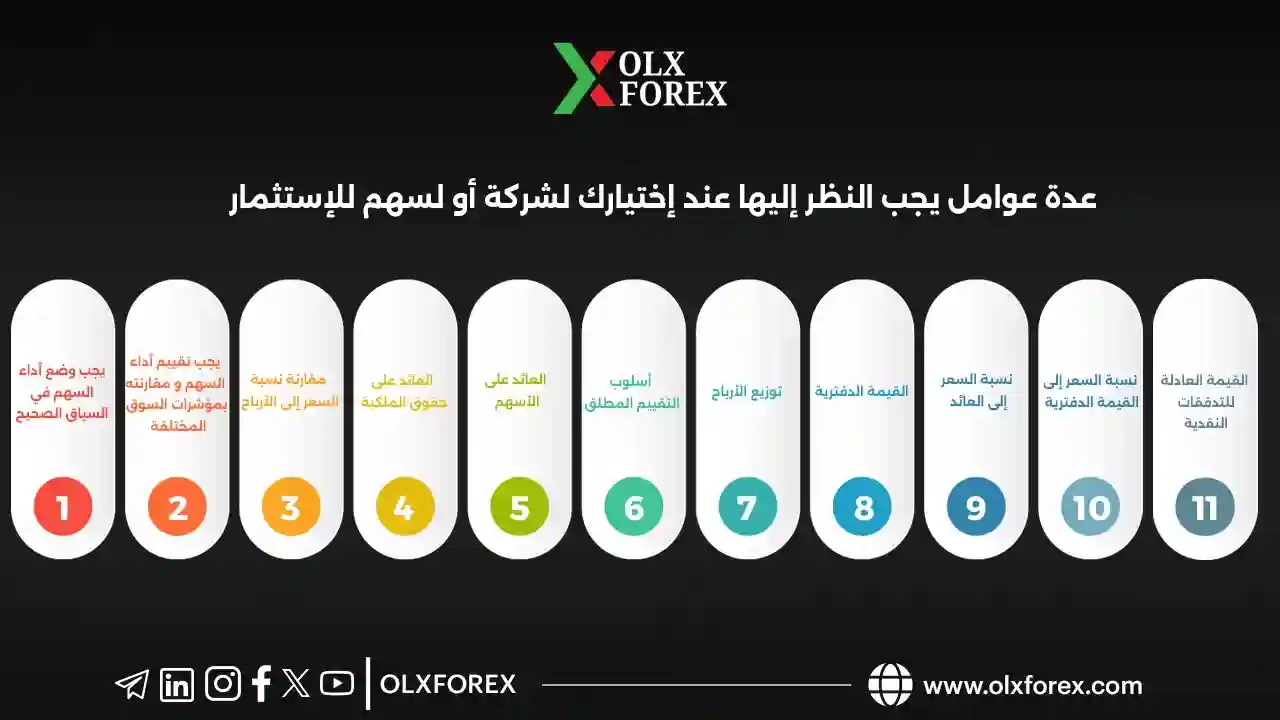
كيفية اختيار السهم المناسب للاستثمار
1- يجب وضع أداء السهم في السياق الصحيح لتقييم السهم بشكل صحيح، لذلك يجب تقييم أداء السهم الفعلي في فترة سابقة طويلة على الأقل لمدة عامين .
2- يجب تقييم أداء السهم و مقارنته بمؤشرات السوق المختلفة، وإختيار مؤشر لعدة أسهم كمعيار لهذه المقارنة .
3- مقارنة نسبة السعر إلى الأرباح وهنا يتم إستخدام معادلة بسيطة، وهي كالتالي
سعر السهم مقسوم على ربحية السهم
حيث يشير هذا إلى توقع المستثمرون أما نمو الشركة مستقبلاً، أو إلى أن سعر السهم مبالع فيه و قد نرى تراجع لسعر السهم .
4- العائد على حقوق الملكية و يوضح هذا نسبة الربح الذي تحققه الشركة مقارنة بإستثمارات المتداولون بالسهم أو بالشركة .
5- العائد على الأسهم ويشير هذا إلى أرباح الشركة مقارنة بنتائج الشركة المالية، ويعد هذا واحد من أهم المؤشرات المالية للشركة .
6- أسلوب التقييم المطلق وهنا يتم تقييم السهم بناء على القوائم المالية للشركة للوصول إلى صورة واضحة حول معدل الإنفاق ومصادره وكذلك تطور مستوى الديون، وايضاً مدى إلتزام الشركة بتسديد الديون وأيضاً هامش الربح .
7- توزيع الأرباح: وهنا يتم توزيع جزء من أرباح الشركة على المساهمين، وقد تتم بشكل فصلي أو نصف سنوي أو سنوي أو بشكل غير منتظم .
ويتم تحديد توزيع الأرباح بناء على التاريخ المعتاد فيه لتوزيع الأرباح .
8- القيمة الدفترية: وهنا يتم تحديد القيمة الفعلية لملاك الشركة من أصول، ثم يتم خصم الإلتزامات الخاصة بالشركة من تلك الأصول للحصول على القيمة الفعلية للشركة .
9- نسبة السعر إلى العائد: وهنا قياس سعر السهم إلى ربحية السهم، وإذا كانت النسبة مرتفعة فهذا يدل على توقع نمو مستقبلاً للشركة .
10- نسبة السعر إلى القيمة الدفترية: وهنا يقيس القيمة السوقية للسهم مقارنة بالقيمة الدفترية فإذا كانت النسبة مرتفعة بالمقارنة بالشركات الأخرى في نفس القطاع فهذا يدل أن السهم مقوم بأعلى من قيمته العادلة .
11- القيمة العادلة للتدفقات النقدية: وهنا يتم قياس قيمة التدفقات المالية، فإذا كانت أعلى من القيمة السوقية للسهم فهذا يدل على أن الاستثمار في هذا السهم سوف يكون جيد، أما إذا كانت أقل من القيمة السوقية للسهم فهذا يدل على أن السهم مقوم بأعلى من قيمته العادلة .
بالنهاية يجب الحذر و أخذ قسط كافي من الوقت في البحث جيداً عن الأسهم.
ومراقبة أوضاعها المالية جيداً ومتابعه أخبار كل ما يخص الشركة قبل الإستثمار .


