

Why Doesn't Currency Strength Always Reflect Economic Strength?
Introduction
A strong currency does not necessarily mean a country's economy is performing at its best. Currencies fluctuate based on market expectations, interest rates, capital flows, and global demand; consequently, a nation's currency may appreciate even amidst weak economic growth.
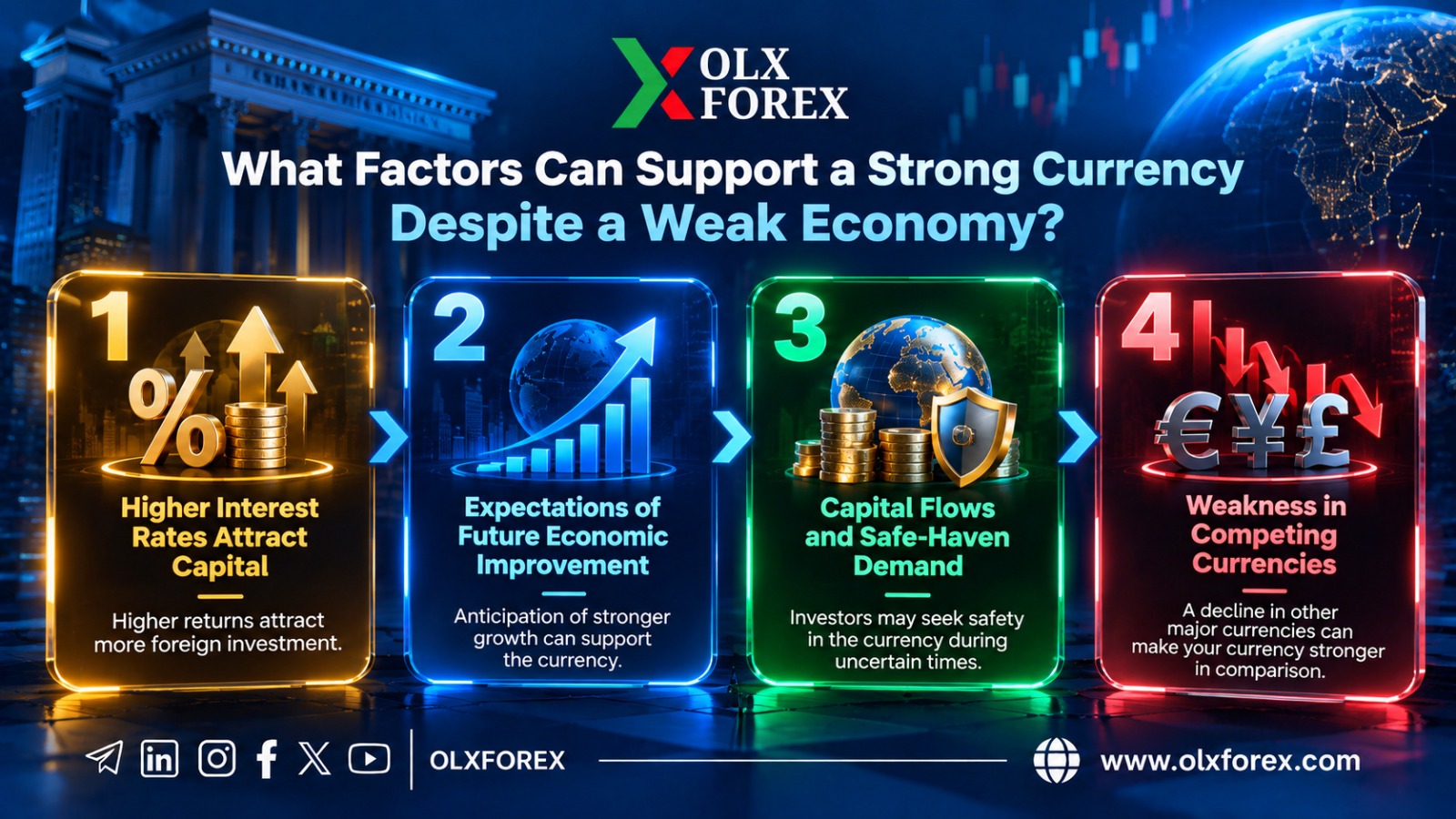
1. High Interest Rates Attract Capital
When interest rates are high relative to other nations, assets denominated in that currency become more attractive to investors seeking higher returns. This can drive up demand for the currency, even if economic growth remains sluggish.
2. Expectations of Future Economic Improvement
Currency markets often move based on future outlooks rather than just current data. If investors anticipate economic improvement or a shift in the central bank's monetary policy, the currency may rise before growth indicators actually show signs of recovery.
3. Capital Flows and the Search for Safety
A currency can benefit from capital inflows for reasons unrelated to the strength of the domestic economy—such as increased demand for local bonds or financial assets. Additionally, some currencies benefit from their status as "safe havens" during times of market turmoil, sustaining demand despite underlying economic issues.
4. Weakness in Competing Currencies
Currency value is relative to other currencies. Therefore, a currency might appreciate not because it is exceptionally strong, but because the counter-currency is facing worse conditions. For this reason, analyzing currency strength requires examining the economic performance and monetary policy of both countries involved, rather than focusing on just one.
Summary
Currency strength does not always reflect economic strength. A currency may appreciate due to higher interest rates, expectations of future improvement, capital inflows, or the weakness of competing currencies. Therefore, when analyzing currency movements, it is best not to rely solely on growth data; instead, one should also monitor interest rates, inflation, capital flows, and market expectations.


