
How Can You Use Leverage Wisely Without Putting Your Account at Risk?
Introduction
Leverage is one of the most distinctive tools in the Forex market, giving traders the ability to open positions larger than their actual capital. While it can amplify potential profits, it also amplifies losses, making its use a double-edged sword.
Therefore, the smart decision isn't about choosing the highest leverage, but rather knowing when and how to use it in a way that aligns with your strategy and risk management.
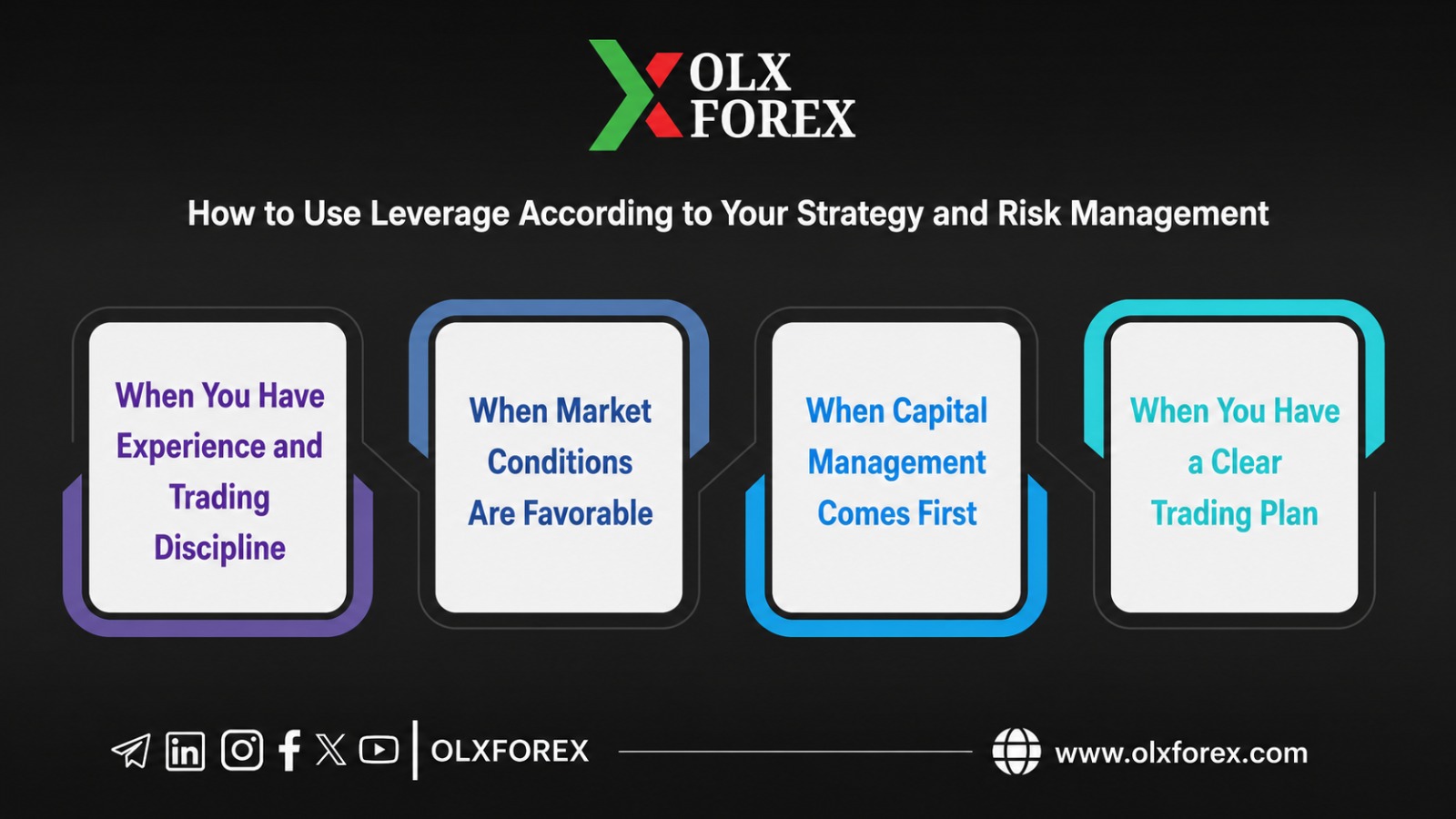
1. When you have a clear trading plan
Leverage should not be used based on expectations or emotions, but rather on a trading plan that includes:
Clear entry and exit points.
A defined risk percentage for each trade.
Realistic profit targets.
Well-considered stop-loss points.
Having a trading plan reduces impulsive decisions and makes leverage a tool for enhancing efficiency rather than increasing risk.
2. When Capital Management is a Priority
Using leverage becomes a smart decision when you only risk a small percentage of your capital on each trade. Professional traders often recommend not risking more than 1% to 2% of your account balance on any single trade.
Even with high leverage, it's not necessary to use it to its full potential. Moderate use helps you weather periods of losses without significantly impacting your account.
3. When Market Conditions are Favorable
The degree of risk varies depending on market conditions. Therefore, it's best to use leverage cautiously when:
The market is relatively stable.
Volatility is within normal ranges.
There are strong technical signals supporting your entry decision.
During major economic news releases or periods of high volatility, it's advisable to reduce position size or use lower leverage, as sudden movements can lead to significant losses in a short period.
4. When You Possess Experience and Psychological Discipline
The more experienced a trader is, the better equipped they are to use leverage responsibly. A professional trader understands that leverage is not a means to achieve quick profits, but rather a tool that requires disciplined execution of the trading plan and a commitment to risk management.
However, a novice trader may fall into the trap of opening large positions due to overconfidence or the desire to quickly recoup losses, which often leads to capital depletion.
Summary
Leverage can be an effective tool for increasing trading efficiency if used within a clear framework of risk management and discipline. Its use becomes a wise decision when a trader has a well-thought-out trading plan, determines an appropriate risk level,
avoids overusing available purchasing power, and considers market conditions and their level of experience. Ultimately, a trader's quality is not measured by the amount of leverage they use, but by their ability to protect their capital and achieve stable long-term results.


