

When Does a Rising Dollar Pose a Risk to Markets?
Introduction
A rising dollar does not always signal a strong US economy; it can sometimes climb due to heightened market anxiety or investors seeking liquidity and safe-haven assets. Therefore, the reason behind the dollar's rise may be more significant than the appreciation itself when attempting to gauge market trends.
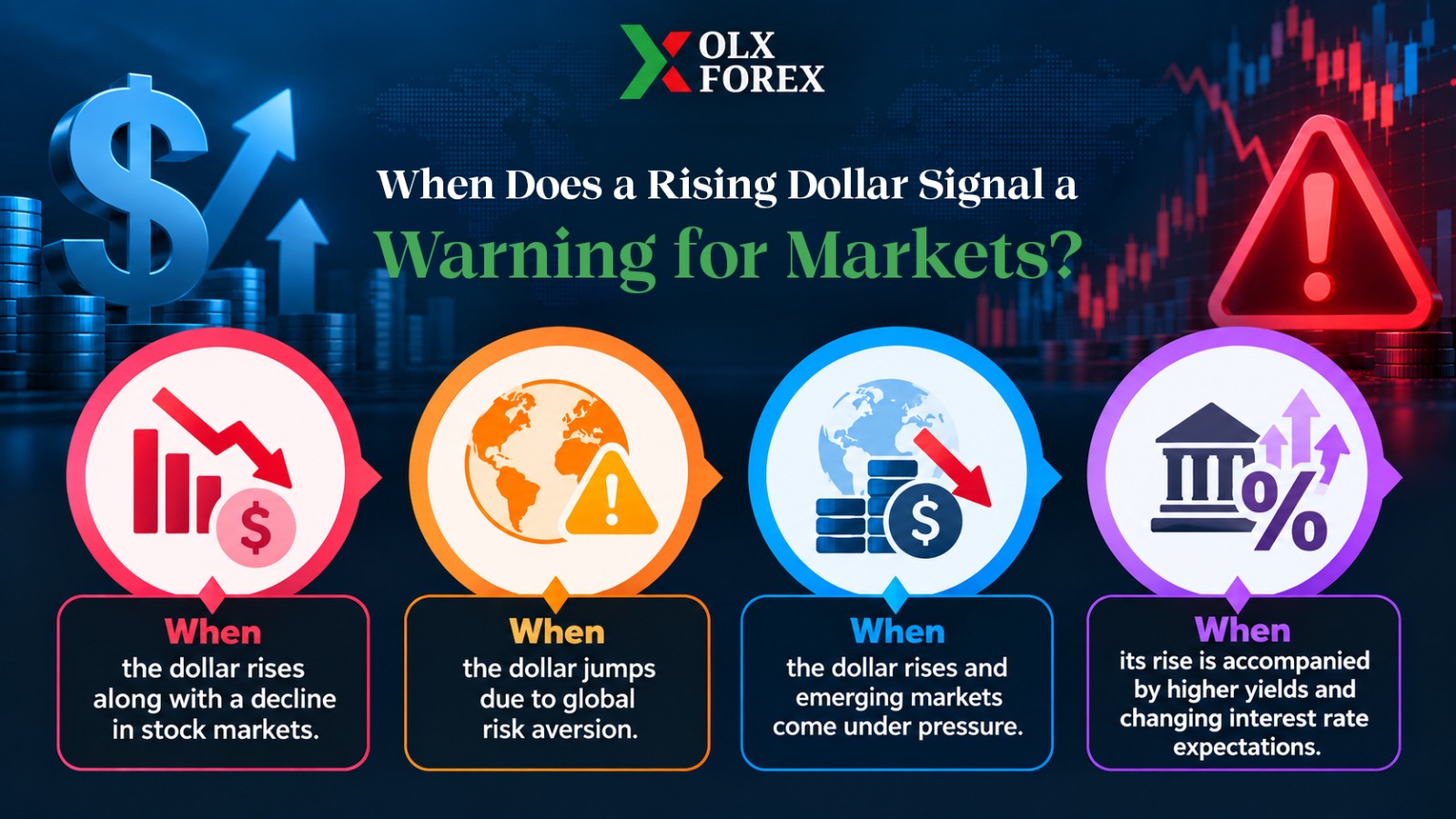
1. When the Dollar Rises Alongside Falling Stocks
If the dollar rises while stock markets decline, it may reflect growing investor caution and fear—particularly if capital is shifting from high-risk assets toward liquidity and safer investments.
2. When the Dollar Surges Due to Global Concerns
The dollar may appreciate during periods of geopolitical tension or concerns regarding global economic growth. In such cases, the rise is not necessarily driven by a strengthening US economy, but rather by increased demand for the dollar as a primary source of liquidity and a relative safe haven during times of uncertainty.
3. When the Dollar Rises and Emerging Markets Face Pressure
A strong dollar can intensify pressure on certain emerging markets, particularly for countries and companies holding dollar-denominated debt. A rising dollar makes servicing these obligations more expensive in local currency terms and may trigger capital outflows from higher-risk markets.
4. When the Rise Is Accompanied by Higher Yields and Shifting Interest Rate Expectations
A rise in the dollar coinciding with an increase in US bond yields may reflect a shift in investor expectations regarding interest rates. However, if the dollar rises while growth forecasts and markets decline, the signal may be different; in this case, one must analyze yields, equities, economic data, and Federal Reserve projections in conjunction, rather than relying on the dollar alone.
Summary
A rising dollar becomes a more significant warning signal when accompanied by falling stock prices, increased volatility, pressure on emerging markets, or heightened demand for safe-haven assets. Therefore, observing a rise in the dollar is not enough; the crucial factor is understanding why it is rising and what is simultaneously occurring in other markets.


