

Why Does Revenge Trading Destroy Traders' Accounts?
Introduction
After a series of losing trades, many traders fall into a dangerous trap known as "revenge trading." In this case, the goal isn't to make a well-thought-out trade, but rather to recoup losses as quickly as possible.
This is where decisions begin to be based on emotion instead of analysis, which can turn a small loss into a significant one that threatens the entire capital.
Therefore, revenge trading is one of the most common reasons for traders' failure, regardless of their experience.
1. What is Revenge Trading?
Revenge trading is entering new trades out of anger or frustration after a previous loss, without waiting for a genuine trading opportunity. In this situation, the trader often ignores the rules of their strategy, focusing solely on recouping losses by any means.
2. Signs You Are Trading for Revenge
Opening trades immediately after a loss without a clear entry signal.
Increasing the size of contracts excessively to quickly recover losses.
Neglecting or constantly adjusting stop-loss orders.
Feeling angry or stressed while making trading decisions.
Continuing to trade despite losing focus and discipline.
3. Why is revenge trading dangerous?
When emotions take over, the quality of decisions drops significantly. Instead of adhering to a clear trading plan, traders start chasing the market and entering into impulsive trades, increasing the likelihood of consecutive losses. In many cases, the problem isn't the first trade, but the subsequent trades driven by revenge.
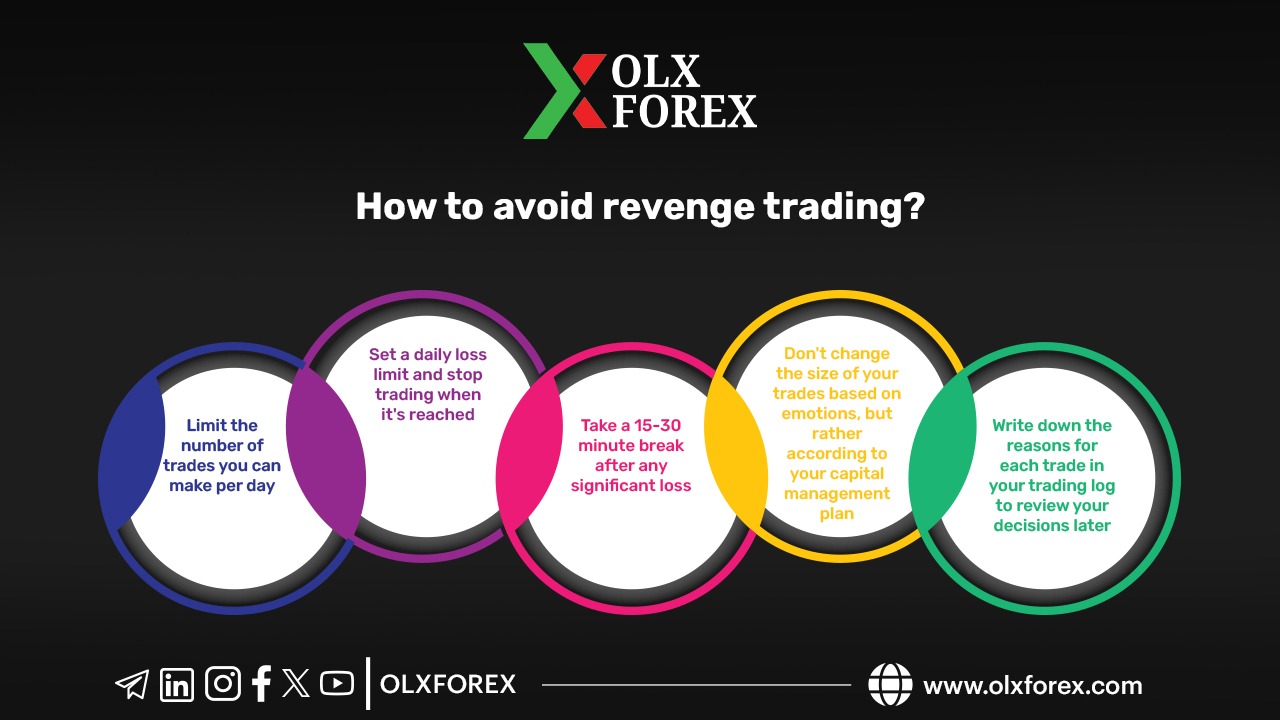
4. How to avoid revenge trading?
Limit the number of trades you can make per day.
Set a daily loss limit and stop trading when it's reached.
Take a 15- to 30-minute break after any significant loss.
Don't change the size of your trades based on emotions, but rather according to your capital management plan.
Write down the reasons for each trade in your trading log to review your decisions later.
5. Professionals Don't Seek Revenge
A professional trader understands that losses are a natural part of the market, and that success isn't achieved by winning every trade, but by adhering to a trading plan that delivers positive results in the long run. Therefore, they accept small losses and maintain their discipline, knowing that opportunities are endless, while capital can be lost due to a single emotional decision.
Summary
Seeking revenge against the market isn't just a psychological flaw; it's one of the most dangerous behaviors that can deplete accounts. If you find yourself trading with the urge to quickly recoup losses, it's best to pause and review your plan before making any new decisions.
Always remember that protecting your capital and maintaining discipline are far more important than recouping a temporary loss, and that success in Forex depends on the quality of your decisions, not on how quickly you recover your money.


