

Before you hit the buy or sell button... follow this daily routine
Introduction
The success of professional traders depends not only on having a strong strategy, but also on having a structured daily routine that helps them make decisions based on analysis and discipline, not emotion. The minutes before opening your first trade can be the difference between a professional trade and one riddled with mistakes.
Therefore, building a consistent daily routine gives you a clearer view of the market and reduces hasty decisions that could cost you a significant portion of your capital.
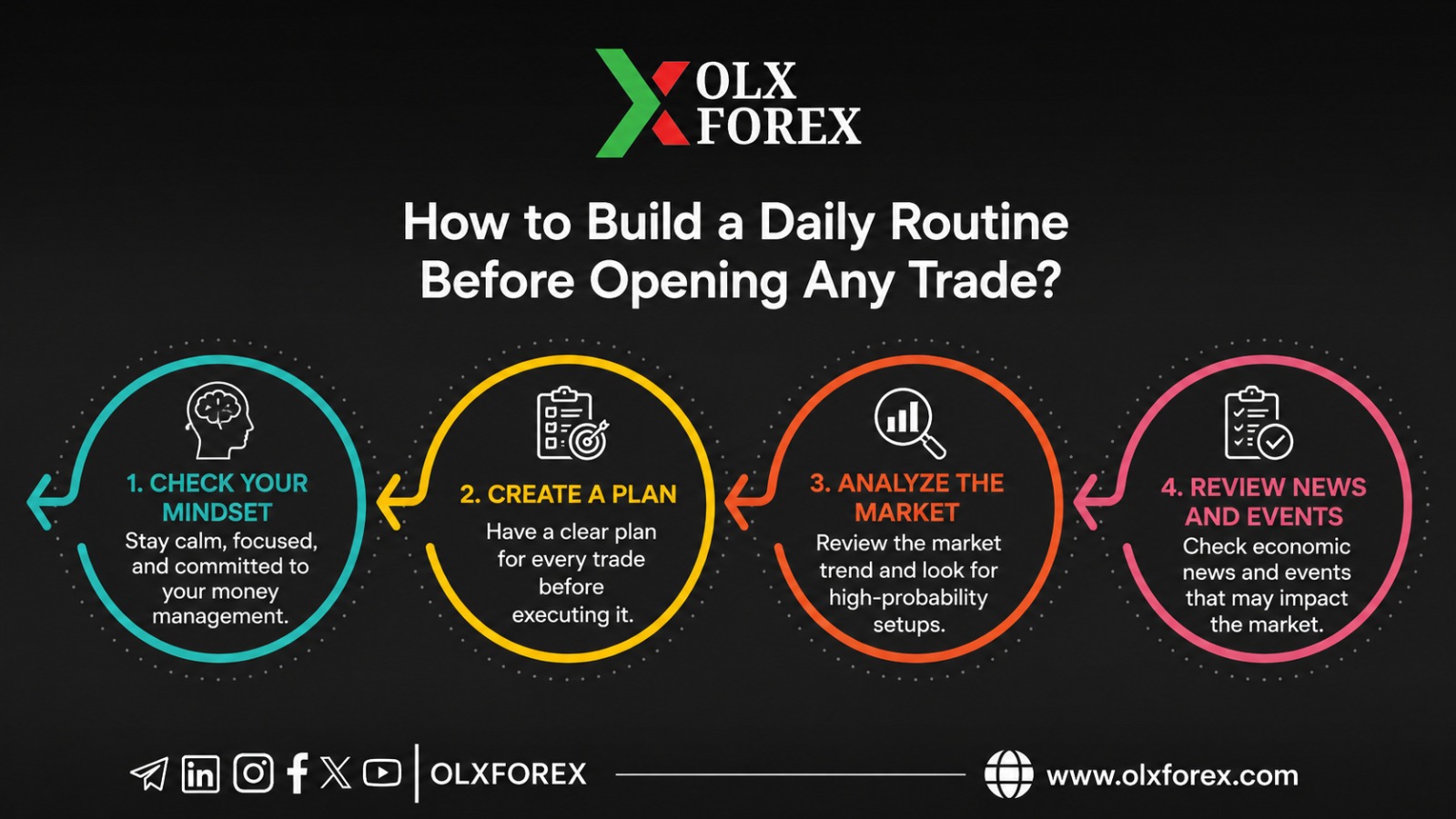
1. Start by reviewing economic news and influential events
Before looking at charts, check the economic calendar to see what data is expected to be released during the day, such as interest rate decisions, inflation reports, labor market data, and speeches by central bank officials.
These events can lead to a sharp increase in volatility, so it is important to know:
The timing of important news.
Which currencies will be affected.
Whether it is better to avoid trading before the news is released or wait for the market to stabilize afterward.
Having this background information helps you avoid entering into high-risk trades without a plan.
2. Determine the overall market trend before looking for entry opportunities
One of the most common mistakes traders make is looking for an immediate entry point without knowing the main trend.
Therefore, make sure to:
Analyze the trend on larger timeframes such as the daily or 4-hour charts.
Identify key support and resistance levels.
Draw important supply and demand zones.
Determine whether the market is moving in a clear direction or within a sideways range.
When you trade with the overall trend, your chances of success are higher than when you repeatedly try to catch reversals.
3. Have a clear plan for each trade before executing it
No trade should be a spur-of-the-moment decision; it should be preceded by a written plan that includes all its details.
Before hitting the execute button, ask yourself:
Why am I entering?
Where will my stop-loss be?
Where will my take-profit be?
What is the risk-to-reward ratio?
Does the trade align with my strategy?
If you can't answer these questions clearly, it's best to wait for a better opportunity.
4. Assess Your Mental State and Commit to Capital Management
Mental state influences trading decisions more than many realize. Stress, anger, greed, and the desire to recoup losses can lead you to make impulsive decisions.
Before you start trading, make sure you:
Are focused and calm.
Are not trying to quickly recover previous losses.
Are committed to a fixed risk percentage for each trade.
Are prepared to accept losses if the market moves against your expectations.
It is also advisable to set a daily loss limit. Once you reach it, stopping trading is a professional decision that preserves your capital.
Summary
A daily routine is not just a habit; it is an essential part of any successful forex trader's success. Reviewing the news, analyzing the overall trend, developing a clear plan for each trade, ensuring mental readiness, and adhering to risk management are all steps that help improve the quality of decisions and reduce impulsive trading.
With continued adherence to this routine, discipline becomes a daily habit, which distinguishes a successful trader from one who relies on luck and impulsive reactions.
Before you click the "Buy" or "Sell" button... follow this daily routine Introduction The success of professional traders doesn’t depend solely on having a strong strategy; it begins even before that with a structured daily routine that helps them make decisions based on analysis and discipline, rather than emotion. The minutes leading up to opening your first trade can be the difference between professional trading and trading riddled with mistakes. Therefore, establishing a consistent daily routine gives you a clearer view of the market and reduces the likelihood of hasty decisions that could cost you a significant portion of your capital. 1. Start by reviewing economic news and influential events Before looking at the charts, check the economic calendar to see what data is expected to be released during the day, such as interest rate decisions, inflation reports, labor market data, and speeches by central bank officials. These events can lead to a sharp spike in volatility, so it’s important to know: The timing of key news releases. Which currencies will be affected. Whether it’s better to avoid trading before the news is released or to wait for the market to stabilize afterward. Having this overview in advance helps you avoid entering trades during high-risk periods without a plan. 2. Determine the Overall Market Trend Before Looking for Entry Opportunities One of the most common mistakes is for a trader to start looking for an entry point right away without knowing the main trend. So be sure to: Analyze the trend on larger time frames, such as the daily or four-hour charts. Identify key support and resistance levels. Identify key supply and demand zones. Determine whether the market is trending clearly or moving within a sideways range. When you trade with the overall trend, your trades are more likely to succeed than if you repeatedly try to catch reversals. 3. Develop a clear plan for each trade before executing it No trade should be a spur-of-the-moment decision; it must be preceded by a written plan that includes all the details. Ask yourself the following questions before clicking the “Execute” button: Why am I entering this trade? Where will my stop-loss be placed? Where will my take-profit target be? What is the risk-to-reward ratio? Does this trade align with my strategy? If you can’t answer these questions clearly, it’s better to wait until a better opportunity arises. 4. Assess Your Mental State and Stick to Your Capital Management Your mental state affects trading decisions more than many people realize. Stress, anger, greed, and the desire to recoup losses can lead you to make ill-considered decisions. Before you start trading, make sure you: Are focused and calm. Don’t try to quickly recoup a previous loss. Stick to a fixed risk percentage per trade. Are prepared to accept a loss if the market moves against your expectations. It is also advisable to set a maximum daily loss limit; once reached, stopping trading is a professional decision that preserves your capital. Summary A daily routine is not just a habit; it is an essential part of any trader’s success in the Forex market. Reviewing the news, analyzing the overall trend, developing a clear plan for each trade, ensuring mental preparedness, and adhering to risk management—all these steps help improve the quality of your decisions and reduce random trading. By consistently following this routine, discipline becomes a daily habit—which is what distinguishes a successful trader from one who relies on luck and knee-jerk reactions.


