

Gold Rises to One-Month High as Oil Prices Fall and the Dollar Weakens
Gold prices rose on Wednesday for the third consecutive session, hitting their highest level in about a month, supported by a weak U.S. dollar and falling oil prices, while markets await U.S. jobs data that could provide new clues about the Federal Reserve’s interest rate path.
Gold prices saw a strong rally during today’s trading, with the spot price climbing about 3% to reach $4,179 per ounce, its highest level since July 7, before retreating to around $4,160 per ounce.
U.S. gold futures also rose by about 2% to reach approximately $4,235.30 per ounce, amid ongoing uncertainty regarding U.S. monetary policy and geopolitical developments.
This rise follows gold’s gains for the third consecutive session, reflecting improved investor appetite for the precious metal amid a range of factors supporting prices.
A Weak Dollar Supports Rising Gold Prices
The weakness of the U.S. dollar is one of the key factors that helped drive gold prices higher during today’s trading.
Gold typically benefits from a weaker dollar, as purchasing the precious metal becomes less expensive for investors holding other currencies, which may lead to increased demand for gold in global markets.
Investors are also closely monitoring the dollar’s movements, especially as a series of key U.S. economic data releases approaches, which could influence interest rate expectations in the coming period.
Falling Oil Prices Ease Inflation Fears
Lower oil prices have also helped support gold, as the decline in energy prices has eased some concerns about rising inflation.
Oil prices play a key role in determining global inflation trends, as rising energy costs can drive up the prices of goods and services, which may prompt central banks to keep interest rates high for a longer period.
Conversely, lower oil prices may give monetary policymakers more room to ease monetary policy if inflationary pressures continue to subside.
For this reason, the relationship between gold and oil remains one of the factors investors monitor when analyzing financial market trends.
Developments in the U.S.-Iran Conflict Under Market Scrutiny
On the geopolitical front, markets continue to monitor developments related to efforts to end the U.S.-Iran conflict.
On Tuesday, Qatar announced that it had prepared a provisional proposal to end the conflict, while both Washington and Tehran indicated progress in negotiations to reopen the Strait of Hormuz, leading to a sharp drop in oil prices.
U.S. Interest Rate Expectations Impact Gold Expectations
regarding U.S. monetary policy remain one of the most important drivers of gold prices at present.
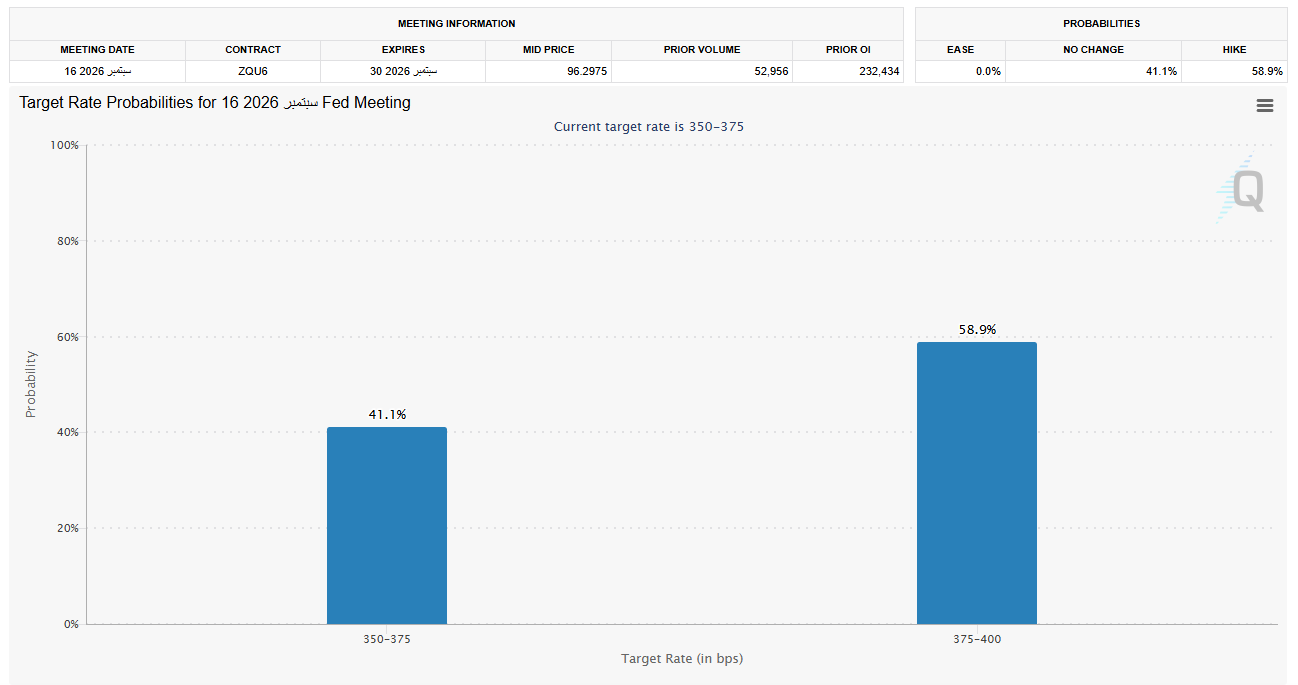
According to trader expectations, the probability that the Federal Reserve will raise interest rates at its meeting scheduled for September 15 and 16 stands at about 59%, down from about 67% the previous day.
The decline in expectations for an interest rate hike suggests that markets have become less hawkish regarding U.S. monetary policy, a factor that could support gold, especially if it coincides with falling bond yields and a weaker dollar.
Gold does not generate a fixed yield like bonds do, so it typically becomes more attractive when expectations of interest rate hikes subside or real yields decline.
U.S. Jobs Data Will Determine Gold’s Direction
Investors are now turning their attention to U.S. labor market data, which could have a significant impact on the movement of gold and the dollar in the coming days.
The ADP employment report is scheduled for release later today, while markets await the U.S. jobs report for July on Friday.
Employment data is particularly important because it helps investors assess the strength of the U.S. labor market and can directly influence interest rate expectations.
If the jobs data comes in weaker than expected, expectations for monetary policy easing could rise, which could support gold prices.
Conversely, if the data shows that the labor market remains strong, expectations that interest rates will stay high for longer could rise, which could put pressure on the precious metal.


