

how to avoid market manipulation of traders
Introduction
The psychological aspect is one of the most serious challenges facing traders in the Forex, stock, and cryptocurrency markets, as emotional decisions can ruin an account even with a solid strategy. Many traders don't lose because of poor analysis, but rather because of fear, greed, impulsiveness, and being swayed by immediate market movements. Therefore, psychological control has become essential for achieving success and consistency in trading.
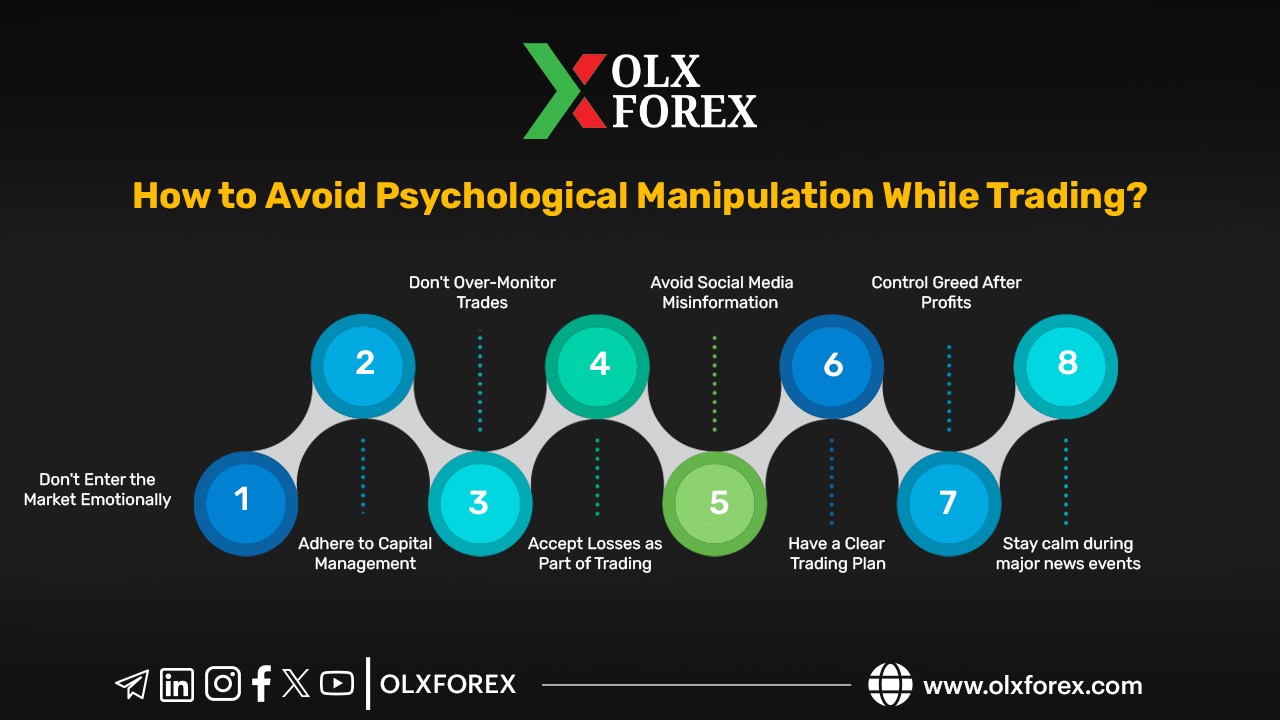
1- Don't Enter the Market Emotionally
Entering trades out of revenge after a loss or excitement after a profit often leads to poor decisions and consecutive losses.
A professional trader relies on a clear plan and specific entry conditions, not on fleeting emotions.
2- Adhere to Capital Management
Risking a large percentage of your account increases psychological stress and makes even the smallest market movement affect your decisions.
Using a fixed risk percentage for each trade helps you trade calmly and with greater confidence.
3. Don't Over-Monitor Trades
Following candlesticks every second creates psychological pressure and pushes you to close trades prematurely or change your strategy for no reason.
After executing a trade based on sound analysis, let the market move naturally according to your defined risk management plan.
4. Accept Losses as Part of Trading
No strategy guarantees a win-win situation, and even the best traders experience consecutive losses.
A normal loss doesn't mean you're a failure; it simply means you're operating in a market based on probability.
5. Avoid Social Media Misinformation
Some content creators showcase huge profits and unrealistic trades to attract followers and incite greed.
Focus on genuine learning and building a stable strategy rather than chasing illusory quick profits.
6. Have a Clear Trading Plan
The absence of a plan makes your decisions random and volatile with every market movement.
Pre-determine your entry and exit points, stop-loss levels, and profit targets before opening any trade.
7. Control Greed After Profits
After achieving several successful trades, a trader may become overconfident, leading them to dangerously increase their risk. Consistency in profits comes from discipline, not from big risks.
8. Stay calm during major news events.
Triggered economic news can cause rapid fluctuations that may lead to impulsive decisions under pressure.
If you are not a professional news trader, it is best to wait until the market calms down and trends become clear.
Summary
Success in trading depends not only on technical analysis or knowing the market direction, but also, and perhaps more importantly, on mental control and discipline. A trader who can manage their fear and greed and follows a clear plan with sound money management has a greater chance of perseverance and achieving stable long-term results. The market always presents new opportunities, but maintaining a calm mind is the key to survival and true success.Learn How to Avoid Market Manipulation Targeting Traders Introduction The psychological aspect is one of the most serious challenges facing traders in the forex, stock, and cryptocurrency markets, because emotional decisions can wipe out an account even with a solid strategy. Many traders don’t lose because of poor analysis, but because of fear, greed, impatience, and being swayed by momentary market movements. Therefore, emotional control has become an essential element for achieving success and sustainability in trading. 1- Do not enter the market based on emotion Entering trades out of a desire for revenge after a loss or excitement after a profit often leads to wrong decisions and consecutive losses. A professional trader relies on a clear plan and specific entry conditions, not on momentary emotions. 2- Stick to risk management Risking a large percentage of your account increases psychological stress and makes even minor market movements influence your decisions. Using a fixed risk percentage per trade helps you trade with greater calm and confidence. 3- Don’t overmonitor your trades Checking the candlesticks every second creates psychological pressure and pushes you to close trades early or change your plan for no reason. After executing a trade based on proper analysis, let the market move naturally in accordance with your defined risk management. 4- Accept loss as part of trading No strategy wins every time, and even the best traders go through losing streaks. A normal loss doesn’t mean you’re a failure; it means you’re operating in a market based on probabilities. 5- Avoid social media misinformation Some content creators showcase huge profits and unrealistic trades to attract followers and fuel greed. Focusing on genuine learning and building a stable strategy is better than chasing illusory quick profits. 6- Have a clear trading plan The absence of a plan makes your decisions random and volatile with every market movement. Set your entry and exit points, stop-loss levels, and profit targets in advance before opening any trade. 7- Control greed after profits After several successful trades, a trader may feel overconfident, leading them to take dangerous risks. Consistent profits come from discipline, not from taking big risks. 8- Stay calm during major news events High-impact economic news causes rapid volatility that can lead to making random decisions under pressure. If you are not a professional at trading the news, it is best to wait until the market calms down and trends become clear. Summary Success in trading does not depend solely on technical analysis or knowing the market trend; it depends heavily on psychological control and discipline. A trader who can control their fear and greed and follows a clear plan with good risk management has a better chance of staying in the game and achieving stable results in the long run. The market always offers new opportunities, but keeping a cool head is the key to survival and true success.


