
Gold Hits Two-Month Low Amid Escalating Tensions Between the U.S. and Iran and Rising Inflation Fears
Gold prices fell sharply during trading on Thursday, hitting a two-month low as the precious metal dropped to near $4,370 per ounce, affected by the rise of the U.S. dollar and higher oil prices following new U.S. attacks on Iran.
This decline comes amid growing global concerns about a return of inflation and increased prospects for continued tight monetary policy, which has put strong pressure on gold prices in recent days.
Dollar Rally Weighs on Gold Prices
The U.S. Dollar Index rose to its highest level in a week, supported by increased demand for the U.S. currency as a safe haven amid escalating geopolitical tensions in the Middle East.
The dollar’s rise made gold more expensive for investors holding other currencies, contributing to a decline in demand for the precious metal and pushing prices lower.
Gold is known for its inverse relationship with the U.S. dollar, as a rise in the greenback typically puts downward pressure on gold prices.
Oil Prices Fuel Global Inflation Fears
Pressure on gold also stemmed from rising oil prices following the recent military escalation between the United States and Iran, which reignited fears of rising global inflation rates.
Investors fear that rising energy costs could trigger a new wave of inflation, which might prompt major central banks led by the U.S. Federal Reserve to keep interest rates high for a longer period.
Gold is considered a non-yielding asset, so it is negatively affected by rising interest rates, as the opportunity cost of holding it increases compared to other assets that provide a fixed return.
Markets Lose Faith in Peace News
Despite continued statements regarding the possibility of reaching a diplomatic solution to tensions in the Middle East, markets have become more cautious toward such news following repeated false alarms in recent months regarding potential peace agreements.
Analysts believe that investors will only react strongly to positive news if a formal and genuine agreement emerges between the United States and Iran, while the U.S. dollar will remain the biggest beneficiary of the current uncertainty.
With strong demand for the dollar continuing, gold prices remain under pressure until further notice.
Why has gold lost its luster since the start of the war?
Since the outbreak of war in the Middle East in late February, gold has lost much of its upward momentum, even though the metal typically benefits from geopolitical crises.
This is because rising oil prices have heightened fears of stagflation, prompting markets to scale back expectations of U.S. interest rate cuts.
Rising U.S. bond yields and a strong dollar have also reduced gold’s appeal to global investors.
Markets Scale Back Bets on Rate Cuts
Markets have seen a major shift in their expectations regarding U.S. monetary policy, with interest rate traders scaling back their bets on rate cuts through 2026.
In fact, some forecasts now suggest the possibility of another rate hike by the end of this year if inflationary pressures persist and energy prices rise further.
This scenario is one of the most negative factors for gold in the short and medium term.
Is the upward trend for gold still intact?
Despite the current declines, gold still retains strong long-term support factors.
The most notable of these factors are:
- Continued gold purchases by global central banks
- Growing concerns about global debt and fiscal sustainability
- The potential for a future slowdown in the global economy
- Persistent global geopolitical tensions
Analysts believe these factors could support a return to an upward trend for gold once energy markets stabilize and inflationary pressures ease.
Gold from a Technical Perspective
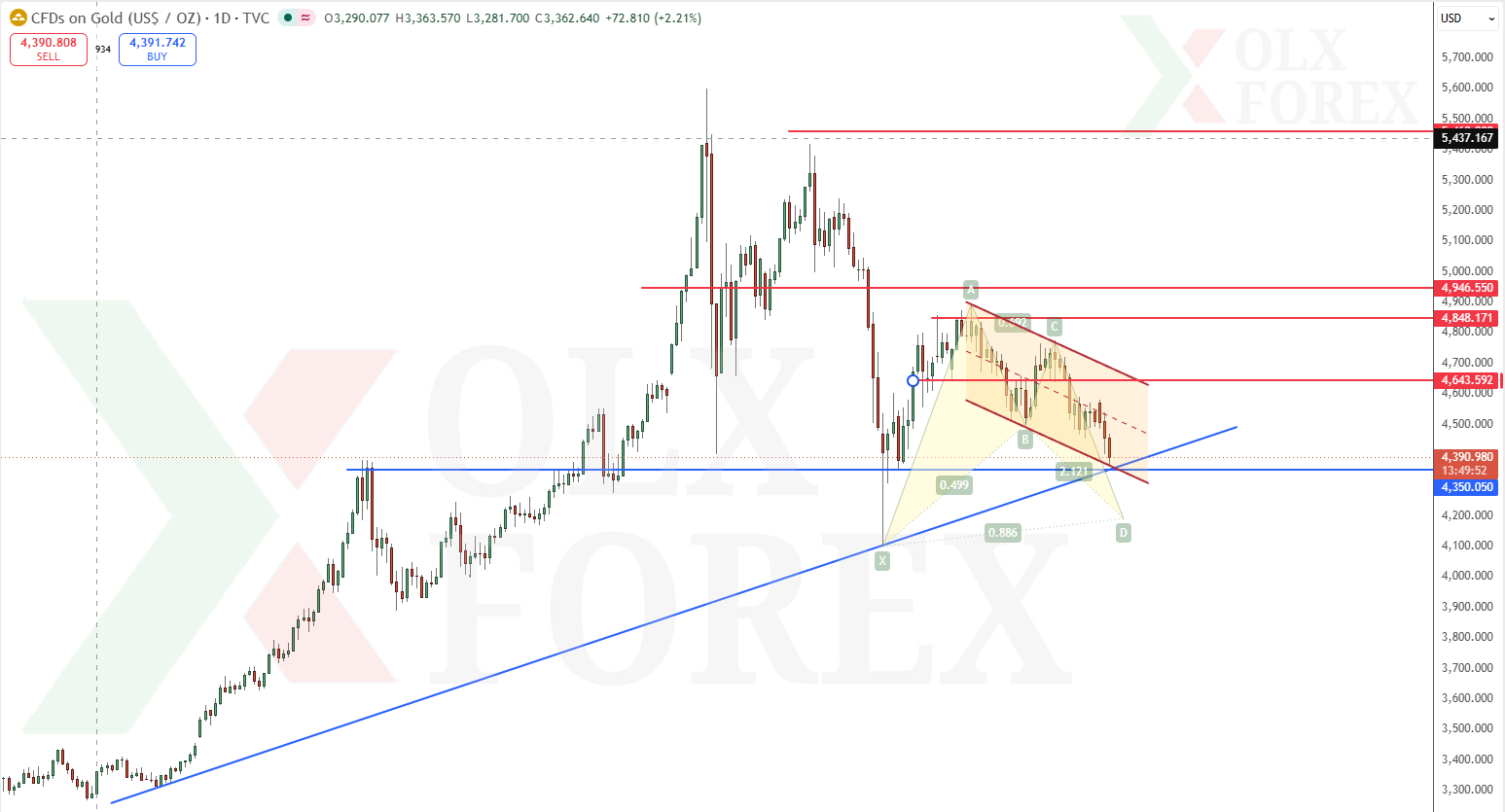
Gold prices have retreated to the levels of the uptrend on the daily chart and also to the lower boundary of the descending price channel, which could push the pair toward some upward corrections toward the upper boundary of this channel near the $4,640 level and, before that, the $4,500 level per ounce.
This scenario would fail if the trend and channel levels are broken to the downside and prices close below $4,350; in that case, our next target would be the completion of the harmonic bat pattern around $4,200 per ounce.
Amid ongoing uncertainty, analysts expect gold prices to remain highly volatile, with markets watching for any developments that could determine the precious metal’s next direction.