

Gold Prices Rise More Than 2% Today, Heading for Best Weekly Performance Since January
Gold prices rose more than 2% on Friday, continuing the strong gains recorded during recent trading sessions, and is on track to post its best weekly performance since January, supported by diminished expectations of U.S. interest rate hikes and easing inflation concerns, coinciding with falling oil prices and market anticipation of the U.S. nonfarm payrolls report.
Gold hit a high today near $4,327 per ounce, after reaching a seven-week high during Thursday’s session.
As a result, gold prices have risen by more than 7% since the start of the week, marking one of the precious metal’s strongest rallies in recent months.
Why Did Gold Prices Rise Today?
The strong gains in gold prices were driven by a combination of factors, chief among them the diminishing likelihood of a U.S. interest rate hike, along with easing inflationary pressures resulting from lower energy prices.
Investors are currently awaiting U.S. labor market data for new clues regarding the Federal Reserve’s monetary policy path, especially since any signs of weakness in the labor market could reduce the need to keep interest rates at high levels for a longer period.
Expectations that Federal Reserve Chair Warsh may adopt a less hawkish stance than previously anticipated have also helped support demand for gold.
Diminished Expectations for a U.S. Rate Hike Support Gold
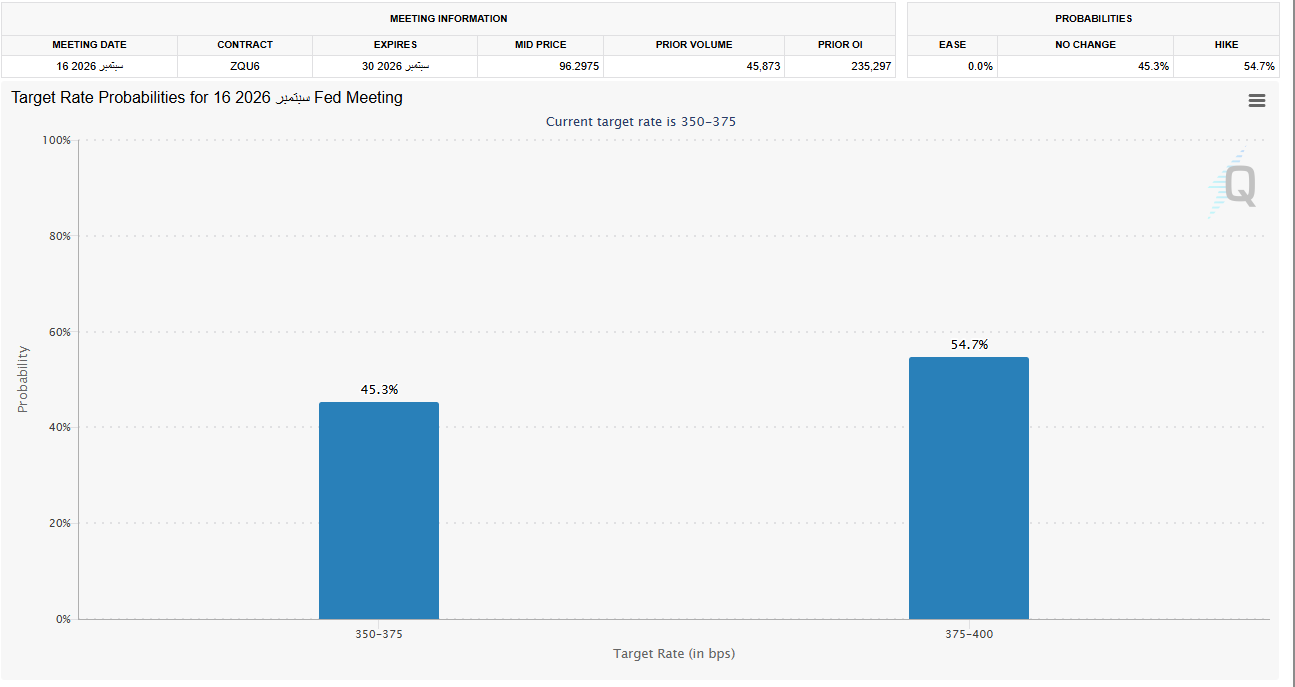
The probability of a U.S. interest rate hike during the September meeting has fallen to less than 55%, down from about 67% last week, which has boosted gold’s appeal among investors.
Gold typically benefits from lower interest rates or reduced expectations of rate hikes, as the yellow metal does not provide a yield to its holders.
consequently, the opportunity cost of holding it becomes lower when yields on competing assets decline.
Conversely, rising interest rates and bond yields typically put pressure on gold, as investors favor assets that offer higher returns.
U.S.-Iran Peace Agreement Eases Inflation Fears
Developments related to the conflict between the United States and Iran have contributed to a shift in market expectations regarding inflation and energy prices.
U.S. President Donald Trump told reporters that he believes the war with Iran will end soon, boosting hopes for a diplomatic breakthrough and stability in energy markets.
Crude oil prices are on track to post a weekly loss, which could help ease global inflationary pressures, especially since rising energy prices are one of the main factors driving inflation higher.
As oil prices decline, investors’ fears of a resurgence in inflation may subside, thereby reducing bets on the Federal Reserve maintaining its hawkish monetary policy.
Gold and Inflation Hedging
Gold has historically been viewed as one of the most important assets used to hedge against inflation; however, the relationship between gold and inflation is not always consistent.
When inflation rates rise, demand for gold as a store of value may increase; however, rising interest rates at the same time can limit the precious metal’s appeal, as it does not generate periodic returns.
For this reason, markets are currently monitoring the balance between inflation concerns, U.S. interest rates, and oil prices to determine the direction of gold in the coming period.
All Eyes Are on Today’s U.S. Jobs Report
Investors attention is focused today, Friday, on the U.S. nonfarm payrolls report for July, which is scheduled to be released at 3:30 p.m. Egypt time.
The jobs data is of great importance to the gold and dollar markets, given its ability to influence expectations regarding the Federal Reserve’s monetary policy.
If the jobs data comes in weaker than expected, expectations that the Fed will avoid raising interest rates may increase, which could give gold prices a fresh boost.
Conversely, data that is stronger than market expectations could boost the dollar and bond yields, which might limit gold’s gains.
Continued Demand for Gold in China
In addition to factors related to U.S. monetary policy, gold is being supported by continued investment demand in China.
Data from clearing houses showed that institutional investors in China continued to build long positions in gold-backed assets as a hedge against volatility in tech stocks.
The People’s Bank of China also continues to purchase gold, which provides additional support for demand for the precious metal and reinforces expectations that the upward trend will continue in the medium term.
UBS Forecasts Gold to Reach $5,000
Amid strong demand for gold and growing uncertainty in global markets, UBS forecast that gold prices will rise to $5,000 per ounce during the first half of 2027.
This forecast reflects the continued positive outlook for gold, particularly given ongoing central bank purchases, rising investment demand, and the likelihood of a shift in U.S. monetary policy toward further easing.
Gold Price Forecasts for the Coming Period
The outlook for gold appears positive amid diminishing prospects for U.S. interest rate hikes, falling oil prices, and continued purchases by central banks and institutional investors.
However, U.S. jobs data remains a decisive factor in determining the short-term trend, as strong data could lead to a rise in the dollar and bond yields and put pressure on gold, while weak data could give the yellow metal a fresh boost.
With factors supporting gold continuing to hold, along with expectations that the price will reach $5,000 per ounce during the first half of 2027 according to UBS forecasts, the precious metal remains in the spotlight for investors as one of the leading assets that could benefit from changes in monetary policy and ongoing uncertainty in global markets.
Gold Prices Rise Today to a 7-Week High—Is It Approaching $5,000?


