

Do Options Movements Precede Currency Movements?
Introduction
While the options market cannot predict the future with certainty, it provides a set of signals that help traders understand market participants' expectations regarding currency movements and potential volatility—often before these trends become clearly visible in the spot forex market.
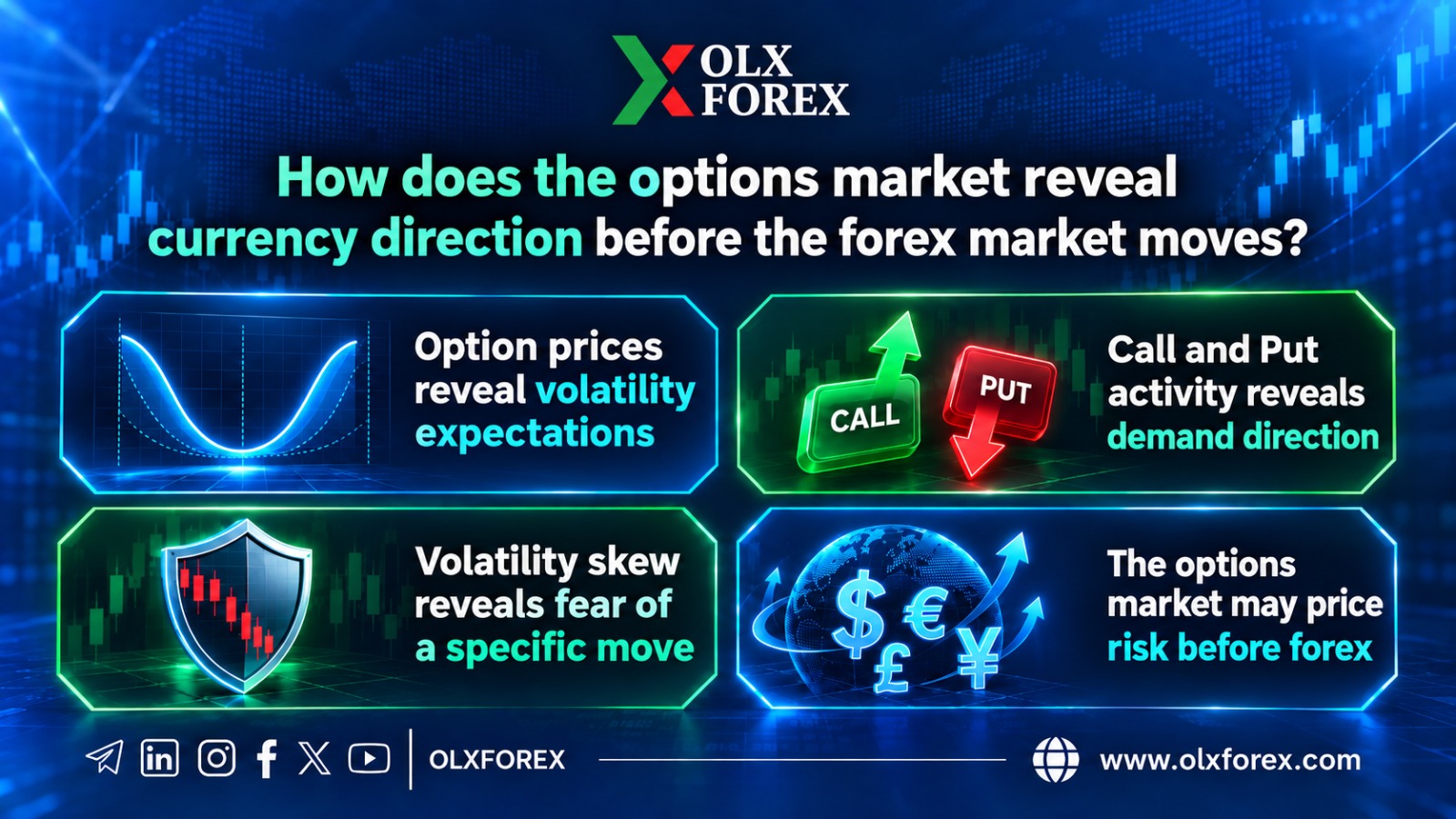
1. Option Prices Reveal Volatility Expectations
Implied Volatility is one of the most critical signals in the options market, as it reflects the magnitude of price movement traders anticipate for a currency over a specific period. A rise in implied volatility often signals expectations of significant movement and frequently appears prior to major events, such as interest rate decisions, inflation data, and employment reports.
2. Call and Put Movements Reveal Demand Trends
Comparing the demand for call options and put options allows one to gauge how market participants are positioned. High demand for options that hedge against a currency's decline may reflect growing bearish sentiment, whereas increased demand for options that profit from a rise suggests a more bullish outlook. However, this data does not necessarily imply a consensus on a single direction, as options are frequently used for hedging rather than mere speculation.
3. Volatility Skew Reveals Fear of Specific Movements
Volatility skew is a key indicator of whether traders are willing to pay a higher premium to protect themselves against a currency's appreciation or depreciation. If options protecting against a currency's decline become relatively more expensive, it may signal heightened demand for downside protection—particularly ahead of major economic news or events.
4. The Options Market May Lead Forex in Risk Pricing
In some instances, the options market begins to reflect new expectations before significant movement occurs in the spot forex market—particularly when investors are anticipating surprise central bank decisions or critical economic data. However, these signals should be interpreted with caution; markets may price in the *probability* of a move rather than its definitive direction. Furthermore, rising option prices might simply reflect heightened perceived risk rather than a specific expectation of a rise or fall.
Summary
The options market can provide early signals regarding the magnitude of expected movement and directional risks in the currency market, though it cannot predict forex movements with certainty. To gain a clearer picture, one can combine data on implied volatility, volatility skew, call and put flows, and spot forex prices, while also monitoring central bank decisions and economic data.


