

The Dollar Continues to Dominate the Currency Market
Introduction
Since the end of World War II, the US dollar has occupied an exceptional position in the global financial system, becoming the most widely used currency in international trade, foreign exchange reserves, and financial transactions.
Despite the emergence of new competitors such as the euro and the Chinese yuan, as well as the rapid growth of digital assets, the question remains relevant in 2026: "Is the US dollar still the king of currencies, or is its dominance beginning to wane?"
The answer is not simple. The dollar faces increasing challenges, but it still possesses strengths that are difficult for any other currency to rival at present.
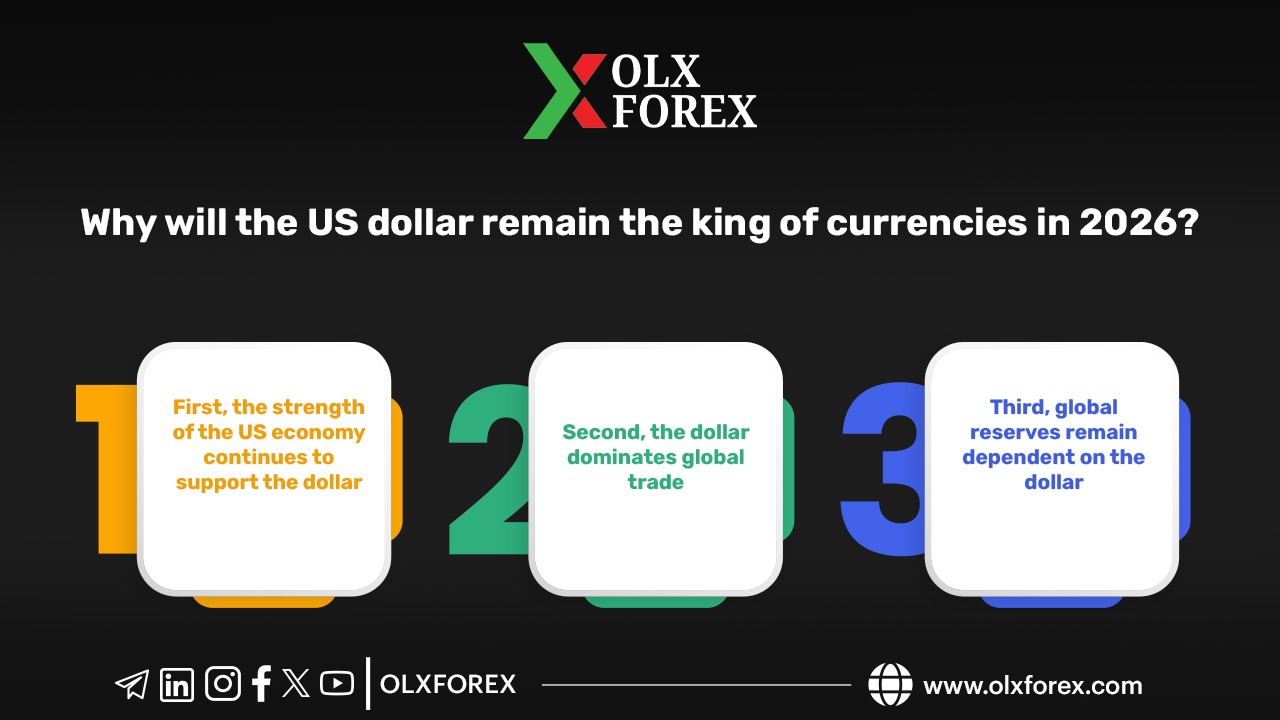
First the strength of the US economy continues to support the dollar.
Any currency derives its strength from the strength of the economy behind it. The United States still has the world's largest economy by nominal value and hosts the largest and most liquid financial markets.
US markets are characterized by their ability to attract global capital in times of both stability and crisis, which continuously boosts demand for the dollar. When global risks rise, investors typically turn to the dollar as a safe haven.
Second the dollar dominates global trade.
Despite efforts by some countries to reduce their reliance on the dollar, a significant portion of international trade is still conducted in US dollars.
Most oil, gas, and commodity contracts are priced in dollars, and many global companies rely on it for their business and financial operations. This gives the US currency an advantage that is difficult to replace quickly, even with the emergence of new alternatives.
Third global reserves remain dependent on the dollar.
Central banks around the world hold a large portion of their foreign exchange reserves in US dollars.
This is due to high confidence in the US economy and easy access to dollar-denominated assets, especially US government bonds, which are among the safest and most liquid financial instruments in the world.
This accumulated confidence over decades gives the dollar a significant advantage over any other competitor.
Summary
In 2026, the US dollar retained its title as the "king of currencies" thanks to the strength of the American economy, its dominance of global trade, and its use by central banks as a primary reserve currency.
However, this dominance faces increasing challenges from the Chinese yuan, global economic shifts, and new technological developments. While the dollar's influence may gradually decline in the long term, no competitor has yet emerged capable of completely dethroning it, making it the most influential currency in global financial markets at present.


