

The Difference Between Trading on a Demo Account and a Live Account
Traders always notice a difference between trading on demo and live accounts, especially after entering the live market and opening their first trade.
This is a very important topic, and we'll discuss it today, highlighting several key reasons.
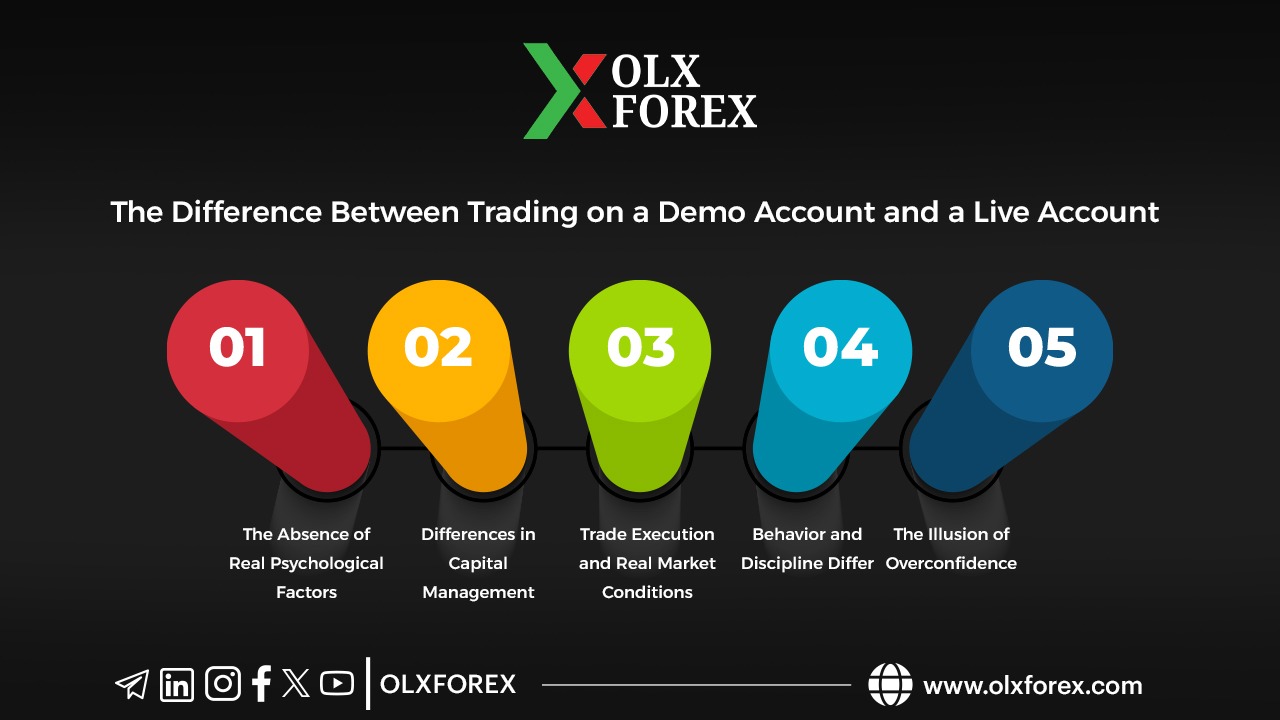
1. The Absence of Real Psychological Factors
On a demo account, traders don't feel fear or anxiety because they aren't risking real money.
You can open large trades and absorb losses without any psychological pressure. However, on a live account, every decision has a strong psychological impact, completely changing your thinking and decision-making process.
2. Differences in Capital Management
On a demo account, most people risk a large percentage of their capital because they know the losses aren't real, making the results seem better than they actually are. On a live account, any loss is painful, making the trader more cautious and sometimes hesitant, which affects their performance.
3. Trade Execution and Real Market Conditions
A demo account often offers perfect trade execution without slippage or delays. However, in the real market, you might encounter price discrepancies and execution delays, which directly impacts trading results, especially during news events.
4. Behavior and Discipline Differ
In a demo account, a trader can easily adhere to the plan because they are not psychologically affected.
But in a real account, emotions interfere and can lead to breaking the rules, such as entering trades without a valid reason or seeking revenge after a loss.
5. The Illusion of Overconfidence
Success in a demo account can give a false sense of expertise, causing the trader to enter the real market with excessive confidence and without adequate preparation.
Once this confidence is established, the first real loss can trigger anxiety and confusion, revealing the significant gap between theoretical experience and reality.
Summary
A demo account doesn't reflect reality because real trading relies heavily on psychological factors, money management, and actual market conditions—factors that aren't as readily apparent in a demo account.
Therefore, a trader might achieve excellent results on a demo account but struggle to replicate that performance when switching to a live account due to the influence of emotions and the realities of the market.


