

What factors determine currency exchange rates between countries?
Introduction
Currency exchange rates fluctuate constantly because the value of any currency is not fixed. It is influenced by supply and demand, as well as a range of economic, political, and monetary factors. Essentially, the exchange rate is the price of one currency in relation to another. Therefore, the strength or weakness of a country's economy can be directly reflected in the value of its currency.
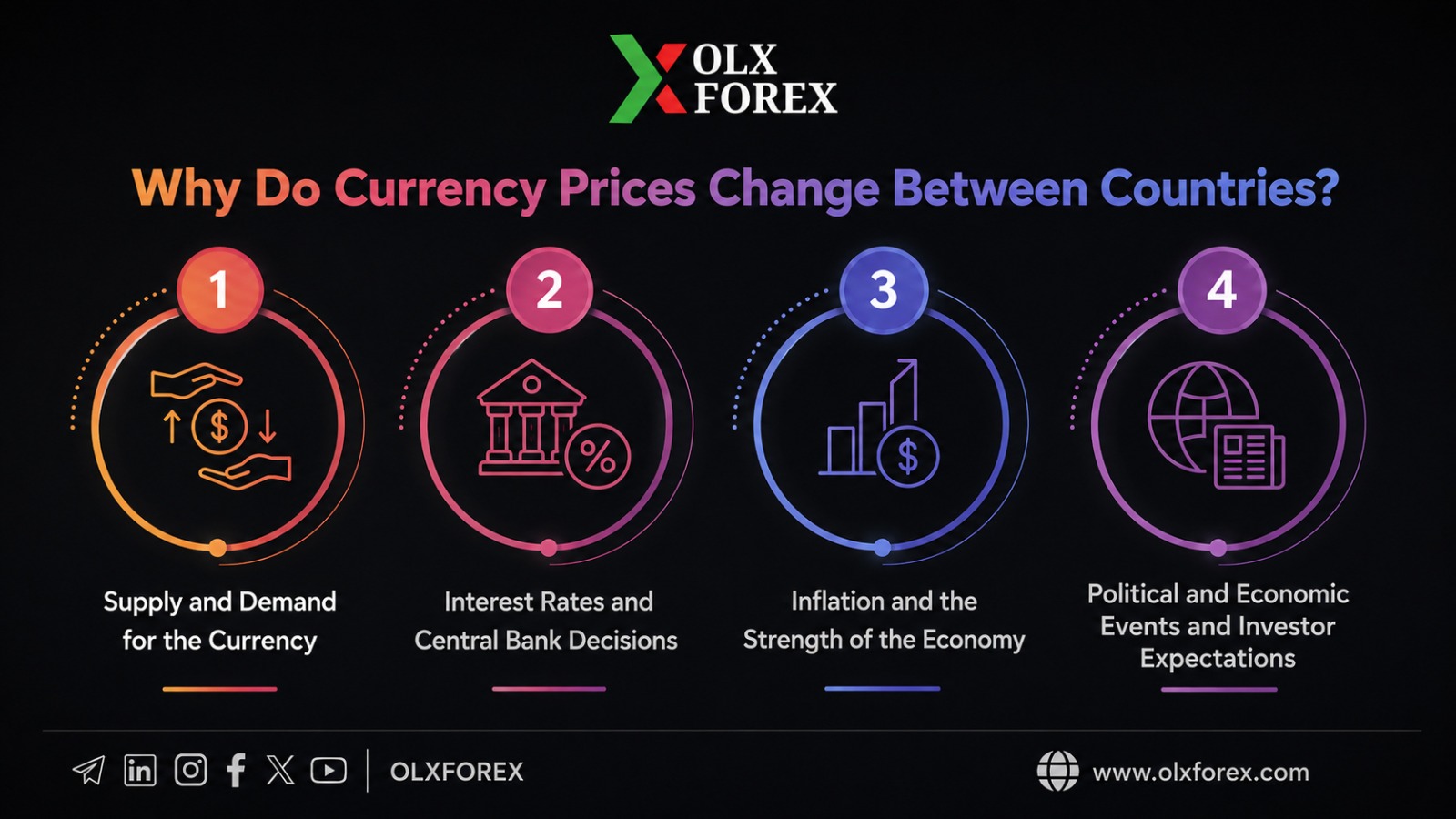
1. Currency Supply and Demand
Supply and demand are among the most important factors determining exchange rates. When demand for a particular currency increases due to increased foreign investment or higher demand for the country's exports, the currency's value tends to rise.
Conversely, if the supply of a currency increases or demand for it decreases, its value may fall. Therefore, trade, investment, and capital flows can directly affect currency exchange rates.
2. Interest Rates and Central Bank Decisions
Interest rates play a significant role in currency movements. When a central bank raises interest rates, assets denominated in that currency may become more attractive to investors seeking higher returns, which can increase demand for the currency and support its value.
Lowering interest rates can reduce a currency's attractiveness, especially if returns in other countries become higher. This is why central bank interest rate decisions are closely linked to currency markets.
3. Inflation and Economic Strength
Inflation also affects a currency's value, particularly when it is high and persistent compared to other countries. High inflation reduces a currency's purchasing power and can weaken its competitiveness with currencies whose economies maintain more stable price levels.
Economic strength, growth rates, productivity, and overall economic stability also influence investor confidence and, consequently, demand for the currency.
4. Political and Economic Events and Investor Expectations
Currencies don't move solely based on current economic data; they are also influenced by investors' expectations of future events. Political crises, wars, trade tensions, changes in government policies, or concerns about the economy can all lead investors to buy currencies they perceive as safer or to move away from others.
Therefore, currency prices can move rapidly even before an actual change occurs in the economy, simply by the emergence of new market expectations. The International Monetary Fund (IMF) notes that political expectations and developments can have a powerful impact on foreign exchange markets.
Summary
Currency prices change as a result of the interaction of a range of factors, not just one. These include supply and demand, interest rates, inflation, economic strength, political stability, and investor expectations. Understanding these factors helps explain why one currency appreciates or depreciates against another, and why exchange rates can move rapidly during times of crisis or significant economic change.


