

Assess Your Strategy's Performance and Whether It Needs Adjustment
Introduction
One of the biggest dilemmas any trader faces is: Is the problem with the strategy itself or how it's being used? Many people quickly change their strategies after any loss, while others cling to them even when they're no longer effective.
The truth is, successful trading isn't just about choosing a strong strategy, but also about knowing when to change it or stick with it.
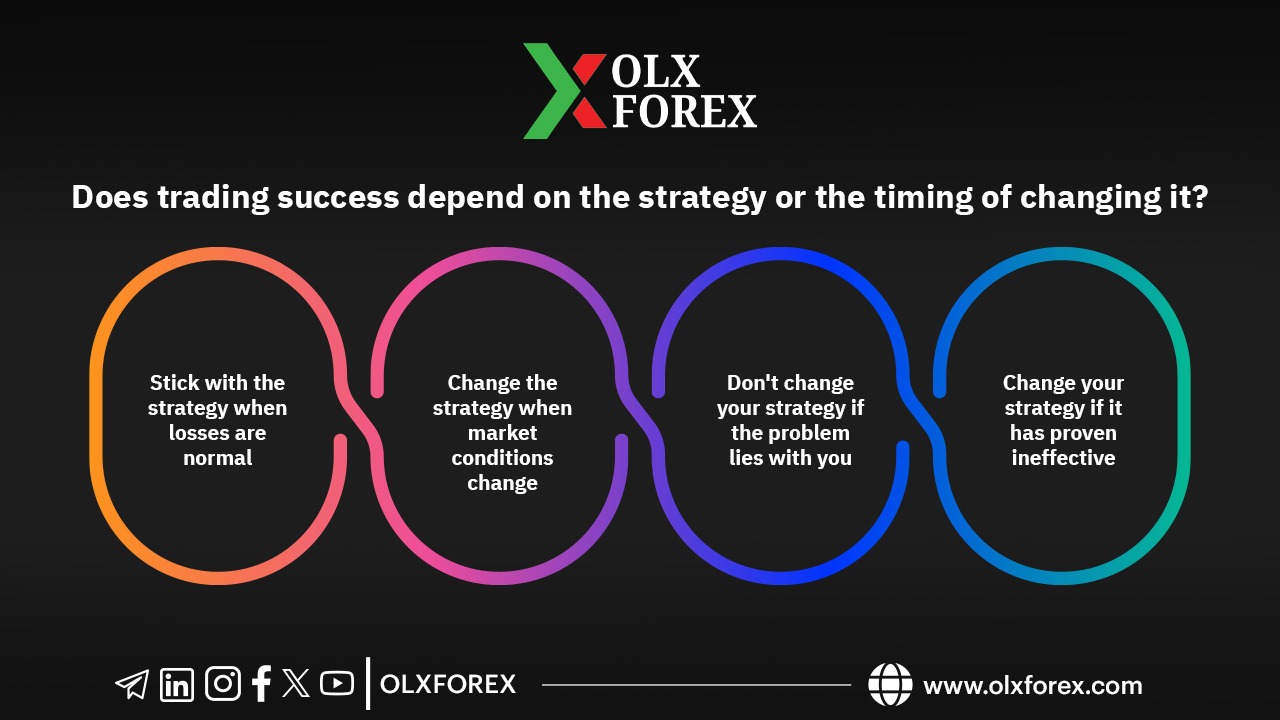
1. Stick with your strategy when losses are normal
Any strategy, no matter how strong, will experience periods of losses, and this is a normal part of the market. If the results are within the expected range (a normal drawdown), this isn't a sufficient reason to change it.
Changing quickly because of one or two losses will put you in a cycle without giving yourself a chance to achieve real results.
2. Change your strategy when market conditions change
The market isn't static; it can shift from a clear trend to a range and vice versa. If your strategy is based on a specific market type, it's natural for it to weaken when conditions change. In this case, you must adjust or change your strategy to suit the new reality instead of imposing an unsuitable approach.
3. Don't change your strategy if the problem lies with you
Often, the problem isn't the strategy itself, but rather the lack of adherence to it. Random entry, ignoring the rules, or being swayed by emotions leads to poor results.
Before you consider changing, ask yourself: Have I implemented the strategy as intended? Or have I modified it haphazardly?
4. Change your strategy if it has proven ineffective
If, after sufficient testing and a large number of trades, you notice that the strategy is no longer yielding positive results or its success rate has significantly decreased, you must reassess it.
The decision must be based on data and analysis, not on feelings or the outcome of a single trade.
Summary
Changing or sticking with your strategy is a crucial decision that must be based on a deep understanding of the market and your own performance. Minor losses are not a reason to change, but market fluctuations or consistently poor performance can be a clear indicator.
A smart trader is one who can distinguish between his personal mistake and a weak strategy, and knows when to improve himself and when to improve his style.


