

The Dollar and the Yen Amidst Fluctuating Risk Appetite
Introduction
Risk appetite is a key driver of currency markets, as it reflects investors' willingness to take on risk. Shifts in this sentiment often impact currencies like the US dollar and the Japanese yen, as capital flows move between safe-haven assets and higher-risk investments.
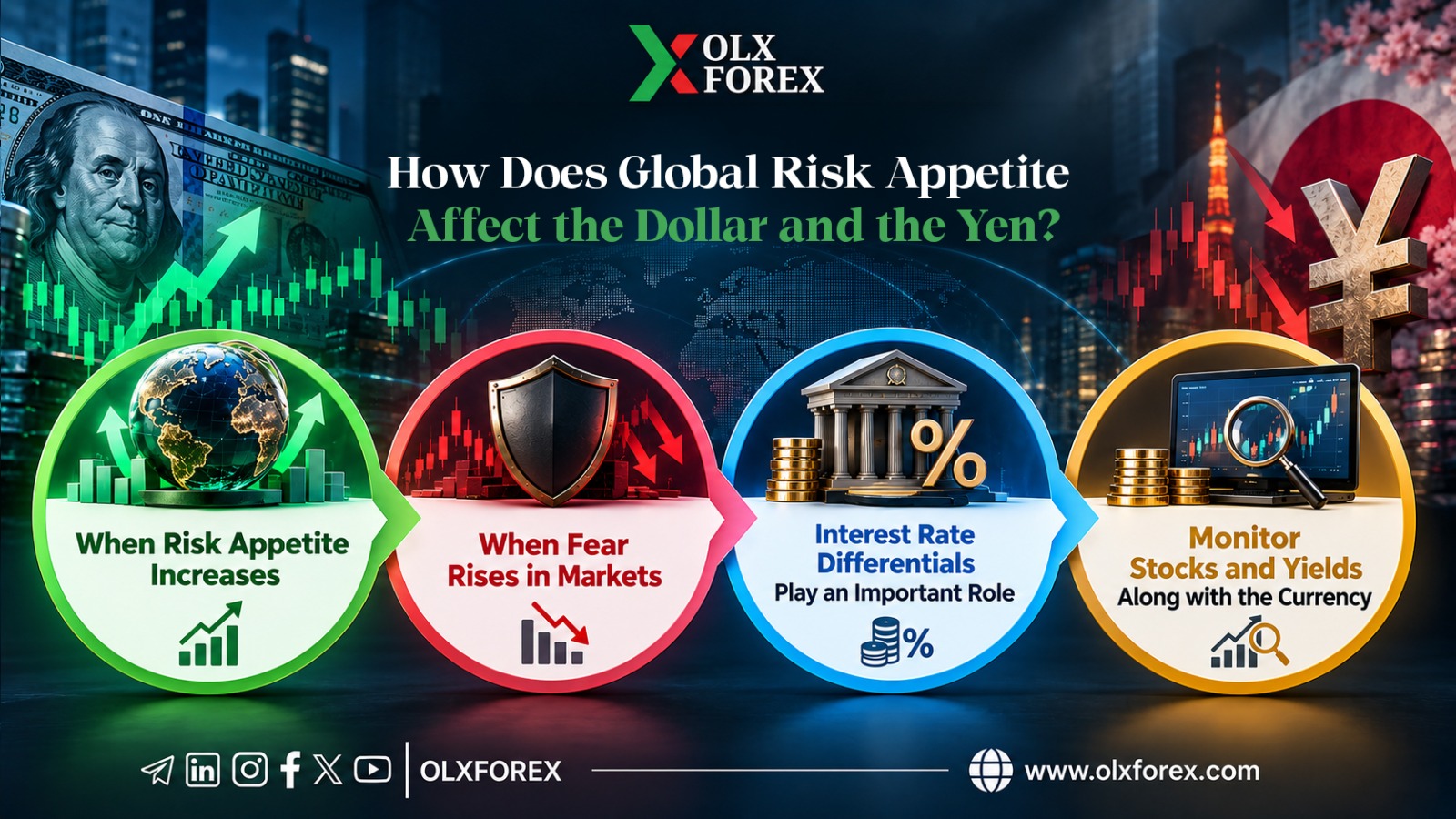
1. When Risk Appetite Rises
When investors are optimistic about the economy and markets, they tend to favor stocks and higher-risk assets, often reducing demand for safe-haven currencies. In this environment, the Japanese yen may come under pressure as capital shifts toward assets and markets offering higher returns.
2. When Market Fear Increases
During times of geopolitical tension, economic uncertainty, or stock market declines, investors tend to reduce risk and seek liquidity and safe-haven assets. Both the dollar and the yen may benefit from increased demand in such scenarios, though the strength of each currency varies depending on the nature of the shock and interest rate expectations.
3. The Role of Interest Rate Differentials
Currencies are not driven by risk appetite alone; interest rate and yield differentials between the US and Japan can alter capital flow trends. When US yields are significantly higher, the dollar may remain supported even as risk appetite improves, while the yen is also influenced by shifting expectations regarding the Bank of Japan's monetary policy.
4. Monitoring Stocks, Yields, and Currencies
To better understand the impact of risk appetite, it is useful to track global stock indices, US bond yields, the US Dollar Index, and the yen in tandem. If stocks decline and demand for the dollar and yen rises, markets may be in a defensive mode; conversely, rising stocks accompanied by falling demand for the yen could signal improved risk appetite. However, these relationships are not always constant, so it is essential to consider the underlying market drivers.
Summary
Risk appetite influences capital flows between safe-haven and high-risk assets, thereby affecting the dollar and the yen. Rising optimism can support risk-linked currencies and assets while pressuring the yen, whereas heightened fear can boost demand for safe-haven currencies. Nevertheless, interest rate expectations, yields, and economic events remain key factors in determining the strength of these movements.


