

Why Might Currencies Move Contrary to the Interest Rate Decision?
Introduction
Interest rate expectations significantly influence currency movements in the forex market, as traders closely monitor central bank decisions and their potential economic implications. However, the market sometimes overprices a specific decision; currencies may move sharply before the announcement, only for the actual market reaction to defy expectations.
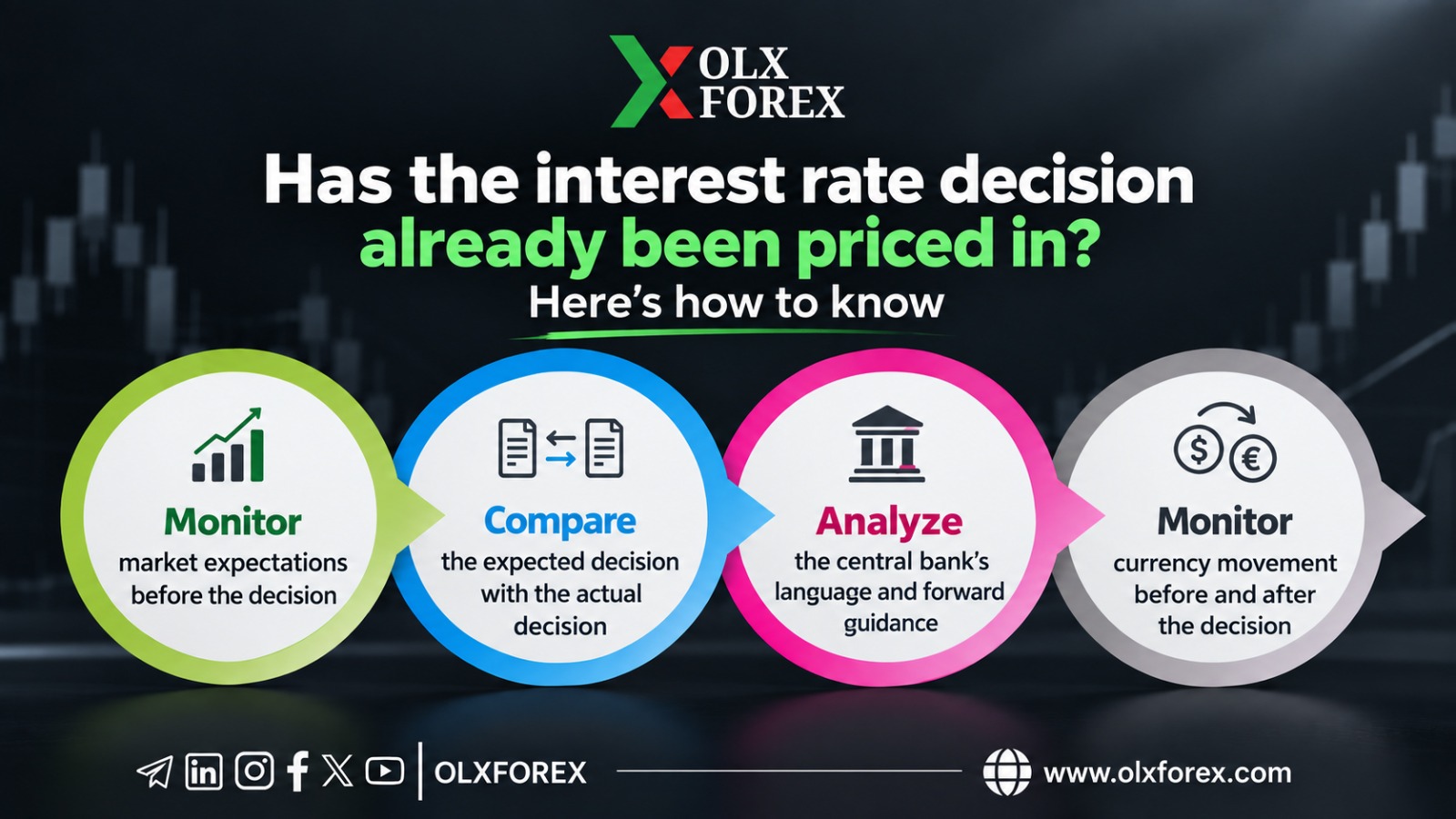
1. Monitor Market Expectations Before the Decision
Trader expectations regarding interest rates are key indicators for determining whether a decision has already been priced in. If markets strongly anticipate a specific rate cut or hike, the currency may have already moved in anticipation of that outcome.
The stronger the consensus regarding a specific decision, the more likely the market reaction will be muted if the actual decision aligns with those expectations.
2. Compare the Expected Decision with the Actual Outcome
The market focuses not only on the decision itself but also on the discrepancy between expectations and reality. If markets anticipate a 25-basis-point rate cut and the central bank delivers exactly that, the currency might not decline significantly, as investors had already factored the move into their positions.
Conversely, if the decision deviates from expectations, we may witness a sharp movement in the exchange rate.
3. Analyze Central Bank Language and Forward Guidance
A central bank might issue a decision that aligns with market expectations, yet its statements regarding future meetings could signal a shift toward a more hawkish (tightening) or dovish (easing) stance.
For instance, if a bank cuts interest rates but hints at a future pause due to persistent inflation, the currency could actually rise despite the rate cut. Therefore, it is essential to analyze the official statement and the press conference alongside the decision itself.
4. Monitor currency movement before and after the decision
A key indicator of overpricing is when a currency moves strongly in a specific direction prior to the decision, only to lose that momentum or reverse course following the announcement.
However, this behavior alone cannot be considered conclusive evidence, as other economic data or shifts in risk appetite may also play a role. Therefore, it is best to consider a combination of price action, interest rate expectations, bond yields, and official statements before making any trading decision.
Summary
Market overpricing regarding an interest rate decision can be identified by comparing expectations with the actual outcome, monitoring currency movements before and after the announcement, and analyzing central bank statements. The more anticipated the decision, the greater the likelihood that the market reaction will be muted or contrary to expectations.


