
Controlling fear during market losses
Introduction
The fear of loss is one of the biggest psychological challenges facing any Forex trader. As soon as a trade starts moving against expectations, stress and anxiety begin to dominate thinking, potentially leading to impulsive decisions that result in even greater losses. The real problem isn't the loss itself, but rather how the trader reacts to it psychologically.
Many traders possess sound strategies and strong analytical skills, yet they lose due to fear, whether by exiting trades prematurely, hesitating to enter, or trying to recover losses quickly. Therefore, controlling emotions while trading isn't an added skill, but a fundamental part of success and long-term viability in the market.
Why Do Traders Feel Fear When They Lose?
Fear in trading is natural, as it's linked to the instinct to protect money. The human mind perceives loss as a direct threat, causing the body to release stress and thinking to become less calm and logical.
Furthermore, some traders link the results of their trades to their personal worth, so if they lose, they feel like failures or experience a loss of confidence. This makes even a small loss turn into a major psychological stressor, especially when the trader has risked more than they can afford.
Fear also increases when a trader enters the market without a clear plan, as they become unsure of why they entered or when to exit.
Accepting Losses is Essential to Trading
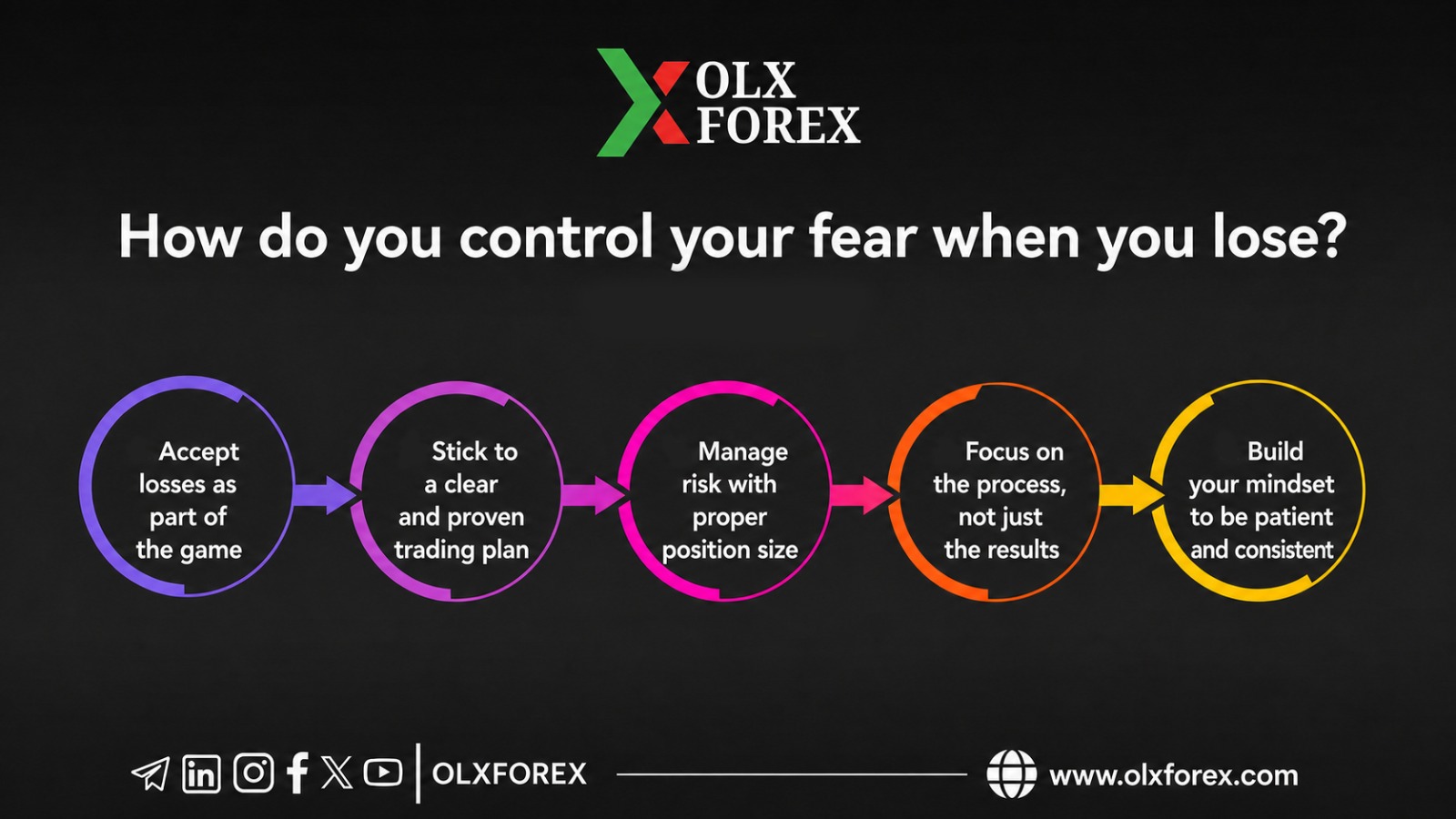
The biggest mistake beginners make is believing that successful traders never lose. The truth is that all professionals experience losses regularly, but the difference is that they consider losses a normal part of the business, not a catastrophe.
No strategy in the world, no matter how powerful, will achieve a 100% success rate. Therefore, a trader must understand that the goal is not to win every trade, but to achieve positive results in the long run.
When you accept the idea that losses are normal, fear gradually decreases because you no longer see every trade as a life-or-death battle.
Money Management Significantly Reduces Fear
One of the main causes of fear is entering a trade with a size larger than the account or psychological capacity to withstand. When a trader risks a large percentage of their capital, every small movement in the market becomes a source of anxiety and stress.
However, when the risk is calculated, losses become psychologically acceptable. This is why professionals focus on protecting their capital rather than seeking quick profits.
Good capital management gives traders peace of mind because they know beforehand that any loss won't wipe out their account or significantly impact it.
Don't enter a trade without a clear plan.
Entering a trade randomly increases fear because the trader doesn't know why they entered the trade in the first place. Therefore, when any market reversal occurs, they begin to hesitate and exit impulsively.
Having a clear plan that includes the entry point, stop-loss, and target makes the decision calmer and more stable. The plan reduces the influence of emotions because it's based on predefined rules.
The professional trader plans everything before entering the market, while the emotional trader starts thinking after entering the trade, and that's where the problems begin.
Don't try to get revenge on the market
After a loss, some traders feel angry and want to recoup their money quickly, so they enter reckless trades without proper analysis. This is called "revenge on the market," and it's one of the most dangerous reasons for zeroing out accounts.
A single loss might be small, but trying to recoup it randomly can turn into a series of much larger losses.
Therefore, when experiencing a significant loss, it's sometimes best to pause and take a break to regain focus and composure.
Confidence comes from experience, not luck
A trader who thoroughly tests their strategy and understands its strengths and weaknesses remains calmer during losses because they know that results are measured over the long term, not based on a single trade.
On the other hand, someone who relies on luck or enters the market without proper testing quickly loses confidence after the first loss.
The more experience and understanding a trader has of the market, the better equipped they become to control their emotions and make rational decisions.
Avoiding emotional attachment to money
When someone trades with money they desperately need, the market becomes a constant source of psychological stress. Any slight movement against them can trigger excessive fear because they aren't just losing numbers; they feel they are losing their personal security.
Therefore, it's crucial to trade with relatively manageable amounts of money to maintain calm and avoid panic-driven decisions.
Emotional attachment to money causes traders to view the market emotionally rather than logically, significantly impacting the quality of their decisions.
How does a professional trader think during a loss? A professional trader doesn't ask, "How much did I lose?" but rather, "Did I stick to my plan?" They understand that consistent adherence to the plan is more important than the outcome of a single trade.
Furthermore, they don't allow fear to dictate their decisions because they recognize that the market is always full of new opportunities. Therefore, they don't view losses as the end, but as part of a long journey that requires patience and discipline.
A professional mindset doesn't mean the absence of fear, but rather the ability to control it and prevent it from driving their decisions.
Article Summary
Fear during losses in Forex trading is a normal experience for all traders. However, the real difference between a successful trader and a loser lies in how they manage this fear. A trader who understands the nature of the market and accepts losses as a part of trading is calmer and more composed.
Controlling fear begins with effective capital management, a clear plan, and avoiding recklessness and seeking revenge against the market. Experience and self-discipline also contribute to making rational decisions, free from emotional influence.
Ultimately, success in trading depends not only on strong analysis but also, and perhaps more importantly, on mental strength and emotional control during periods of pressure and losses.


