

Why the Dollar Can Surprise Traders with Unexpected Moves
Introduction
The US dollar is one of the most influential currencies in global markets, yet it can sometimes move in the opposite direction to what traders expect. This happens because the dollar's price isn't determined by a single factor, but rather by a combination of economic data, central bank decisions, investor expectations, and global market movements.
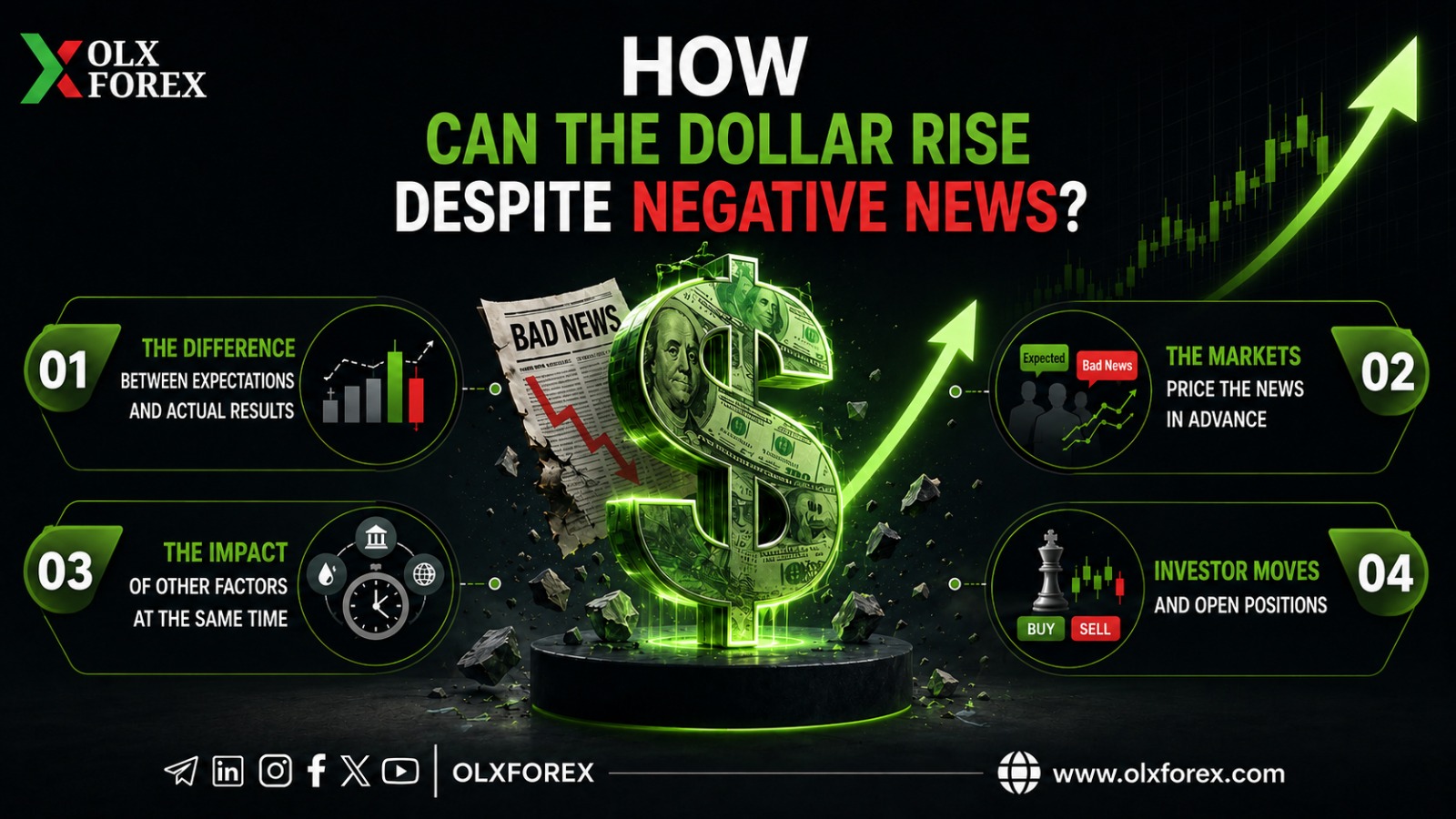
1. The Difference Between Expectations and Actual Results
Markets move based on how much the data differs from expectations, not just on the number itself. For example, if investors expect an interest rate cut and the Federal Reserve's decision is less hawkish than anticipated, the dollar might move differently than expected, even if the decision itself was widely anticipated.
2. Markets Pre-price News
Often, positive news for the dollar is already priced in before it's officially released. Therefore, when the news arrives as the market predicted, the dollar might not rise; instead, it might fall as investors take profits. This is why it's often said that markets trade expectations before the facts.
3. The Impact of Other Factors Simultaneously
Strong data may be released to support the dollar, but at the same time, other developments may push it down, such as rising oil prices, improved investor risk appetite, or the strength of rival currencies like the euro and the British pound. Therefore, it is important to consider the complete economic picture rather than focusing on a single piece of news.
4. Investor Movements and Open Positions
When a large number of traders are in one direction, even a small surprise can lead to strong moves in the opposite direction. For example, if most investors are buying the dollar in anticipation of its rise, and then a contrary signal emerges, they may start closing their positions quickly, increasing selling pressure on the currency.
Summary
A dollar moving against expectations does not necessarily mean that the market moved randomly. Often, the reason is a discrepancy between the data and expectations, pre-priced news, the influence of other economic factors, or investors exiting their positions. Therefore, understanding market expectations before the news release is just as important as knowing the news itself.


